2010 to 2020 mid-rise membrane failures across Sydney
Sydney's 2010 to 2020 mid-rise stock is reaching the age where balcony and podium membranes fail. Here's where the water shows up first in that decade of buildings, and why.
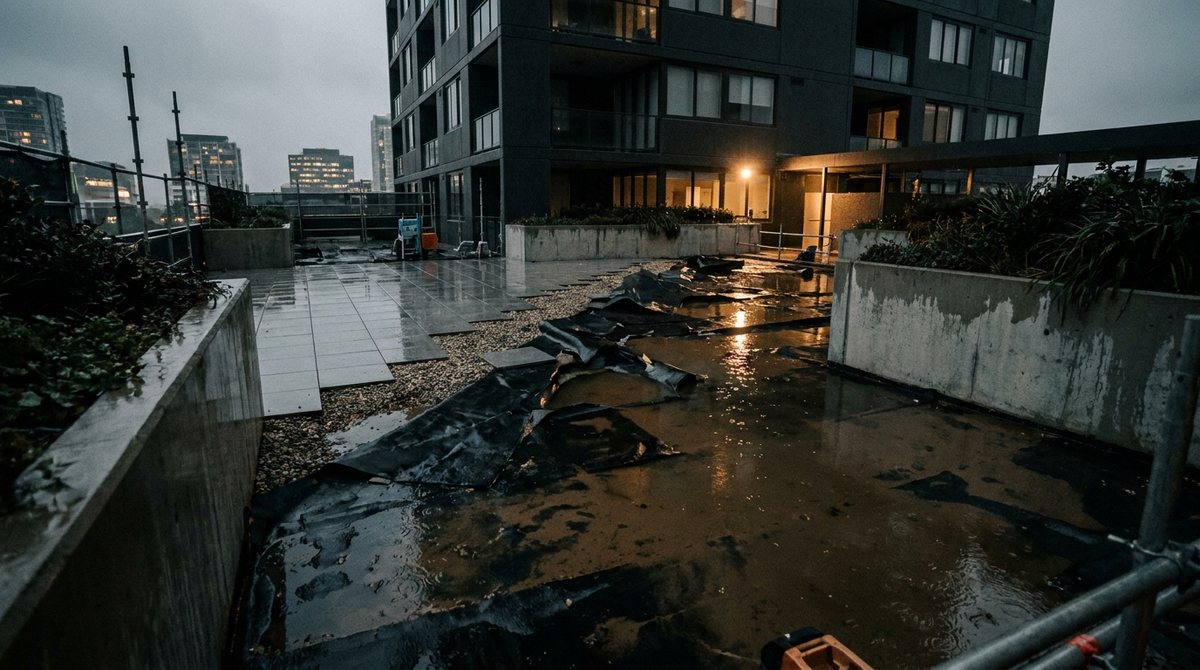
A Zetland mid-rise from 2014 is just starting to leak. Green Square, Mascot, Epping, Macquarie Park, the same decade of stock, the same first stains appearing now. The 2010 to 2020 build run is reaching the age where the waterproofing membranes installed during the boom begin to fail, and the pattern is consistent enough across the stock that a strata manager holding several of these buildings can predict where the next leak surfaces.
The 2010 to 2020 mid-rise is entering its first defect stage now. Membranes are the front line.
Why this stock is failing on this clock
The 2010 to 2020 decade was the peak of Sydney's apartment construction surge. Volume was enormous, and the pressure on detailing and material specification was at its highest. Membranes were frequently value-engineered to meet the budget and programme of fast-moving developments. AS 4654.2 set the bar, but a membrane installed at speed, with marginal falls or a rushed upstand detail, performs for around a decade and then begins to fail at its weakest junction.
Ten to fifteen years on, that clock is running out across the decade's stock. The buildings that went up in 2010 to 2014 are leaking now. The 2015 to 2020 stock is a few years behind. A portfolio of this era is moving into the membrane-failure stage together.
Where the water shows up first
Balcony thresholds lead. The junction where the balcony membrane meets the door threshold is the highest-stress detail on the deck, and the one most often under-detailed. Where the upstand at the threshold was set below the AS 4654.2 minimum, wind-driven rain rises over the membrane termination and tracks inside. The first sign is water at the base of the balcony door, or a stain on the wall inside beneath the threshold.
Podium and planter membranes are next. The 2010 to 2020 stock used landscaped podium decks and planter boxes heavily as amenity. Those membranes sit under constant moisture and root loading, and they begin to fail at the perimeter and the drainage outlets. The water surfaces in the carpark or the apartments below the podium. Then internal wet areas, bathroom membranes to AS 3740 failing into the unit below, on the same decade-long clock.
Why catching it at this stage matters
The 2010 to 2020 stock is, for the most part, still at the membrane stage, before the water has reached the reinforcement. That is the stage where the rectification is a waterproofing job. A committee that programmes the membrane work now, while the defect is still a membrane defect, keeps the building out of the concrete cancer stage entirely.
Left to run, the same progression that took the 2000 to 2010 stock from leaks to spalling slabs will take this decade's stock the same way. The water that surfaces as a balcony stain today reaches the slab steel tomorrow. The whole argument for acting at the membrane stage is that it stops the structural stage from ever starting.
The honest read on a 2010 to 2020 building
If the building is ten to fifteen years old and the first leaks are appearing, it is on schedule, not unlucky. The membranes installed during the boom were not built for a thirty-year life. The responsible move is to treat the first failures as the leading edge of a building-wide membrane programme, get the falls and upstands corrected to AS 4654.2 where they were always marginal, and re-establish the waterproofing before the reinforcement gets wet.
What to do next
- On a 2010 to 2020 building, check the balcony thresholds first. The threshold upstand is the most common early failure point.
- Treat the first leaks as the start of a building-wide membrane programme, not isolated incidents.
- Get the falls and upstands assessed against AS 4654.2. Marginal original detailing is usually the root cause.
- Act at the membrane stage. It keeps the building out of the concrete cancer stage.
How Supcon handles this
Thomas assesses the membranes against AS 4654.2, threshold upstands, falls, podium and planter perimeters, internal wet areas to AS 3740, and writes a programme that addresses the building-wide pattern, not just the first leak. The falls and upstands that were always marginal get corrected as part of the rectification, so the new membrane is not relaid on the original mistake.
Caught at the membrane stage, this decade's stock never has to reach the structural stage. See defects in 2000 to 2010 strata towers for what the next stage looks like, and the waterproofing and membrane service page for the technical detail.
Get a remedial scope. Send through the issue.