Insights & Resources
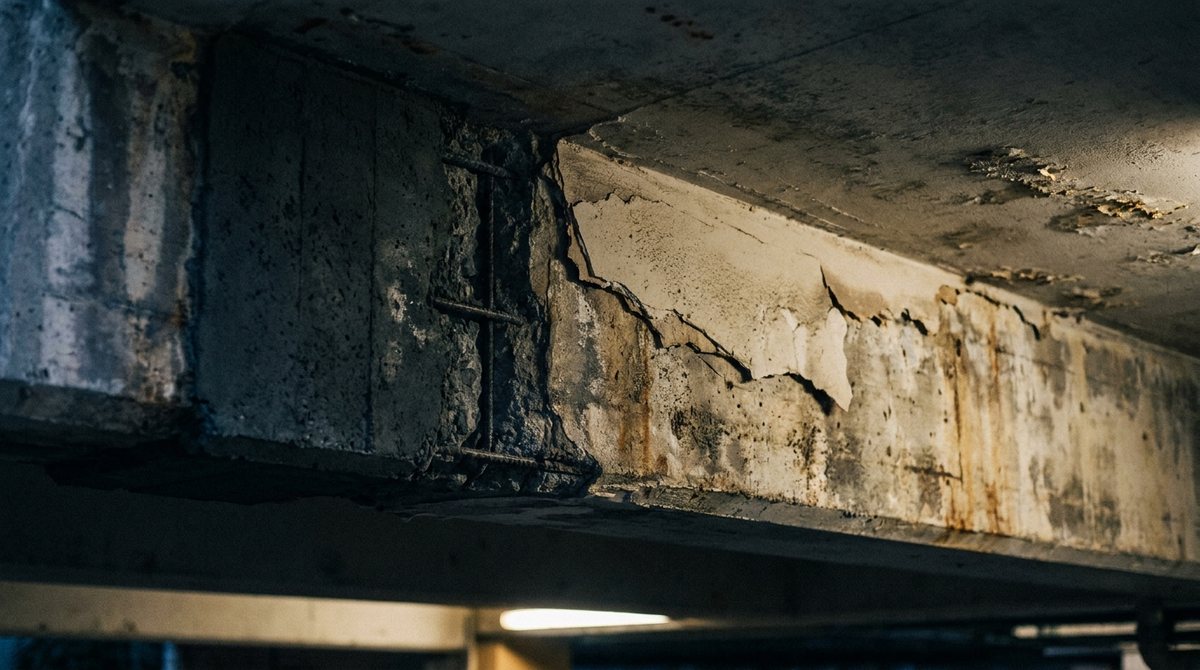
Why the source-fix outlasts the patch
A patched Hurstville balcony returns as a structural rectification inside five years. Here is the progression an Owners Corporation needs to read before approving any surface repair.
How to scope a remedial quote so the strata committee can defend it
The 7-line brief that gets a defensible remedial scope back from a builder. A practical playbook for Sydney strata managers heading into an AGM.
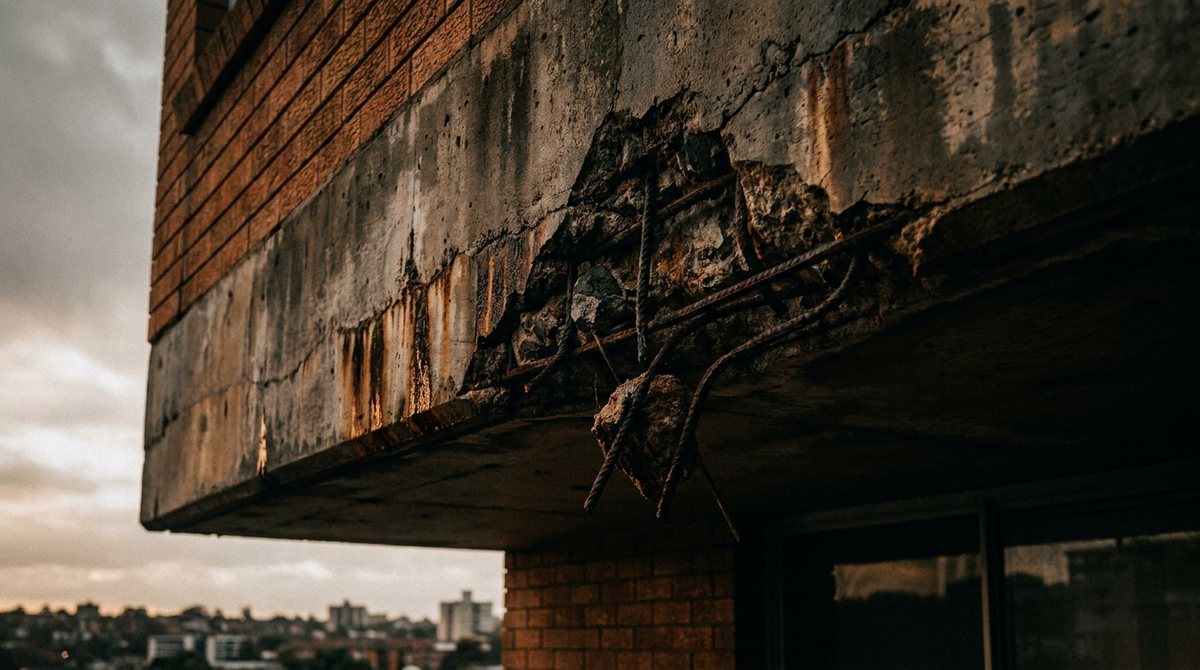
Concrete cancer in Sydney apartment buildings: what you're actually seeing
Brown stains on the soffit. Render bubbling at the parapet. Rebar showing through the cover. A plain-English guide to concrete cancer in Sydney's 2000-2020 strata buildings.
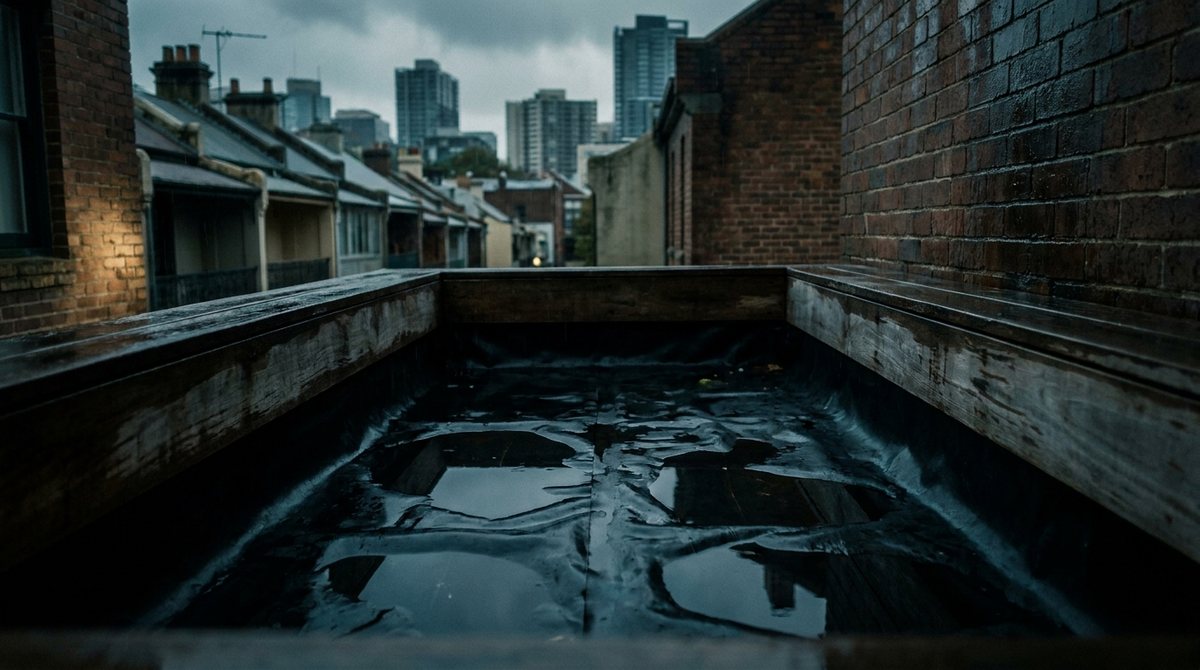
Why your planter box keeps leaking into the apartment below
Planter box failures are Sydney's highest-stakes remedial category. A building-wide scope sounds steep until you read the third call-back. Here's why the membrane keeps winning.
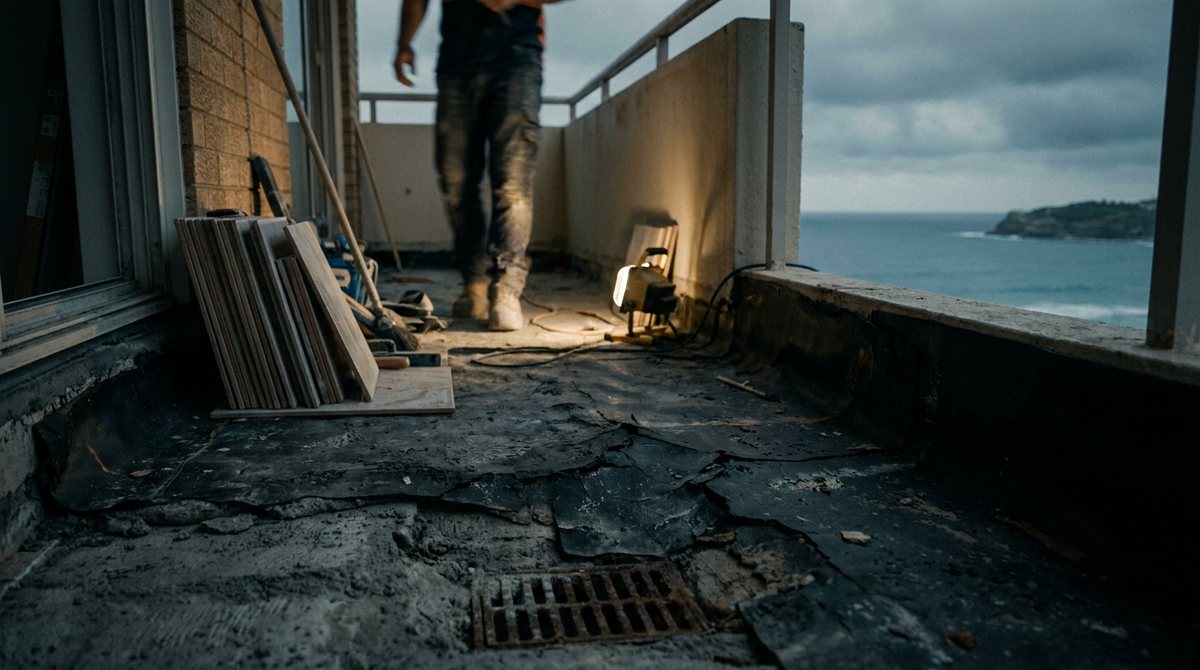
Why cosmetic balcony repairs keep failing
A Coogee balcony recoat looks like a win until the same leak returns in nine months. Here's what cosmetic-only work leaves untouched, and the structural progression that follows.
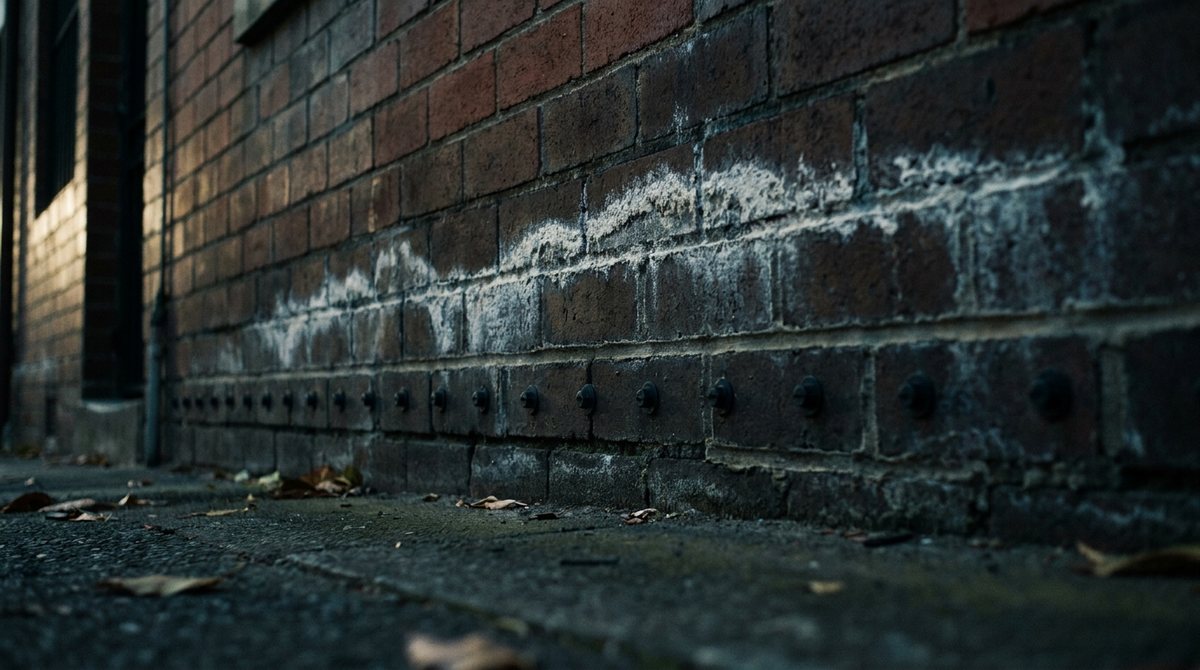
Rising damp in inner west terraces: what actually works
Newtown, Glebe, Annandale, Erskineville. Victorian and Federation terraces with no working damp proof course. Here's what fixes it and what makes it worse.
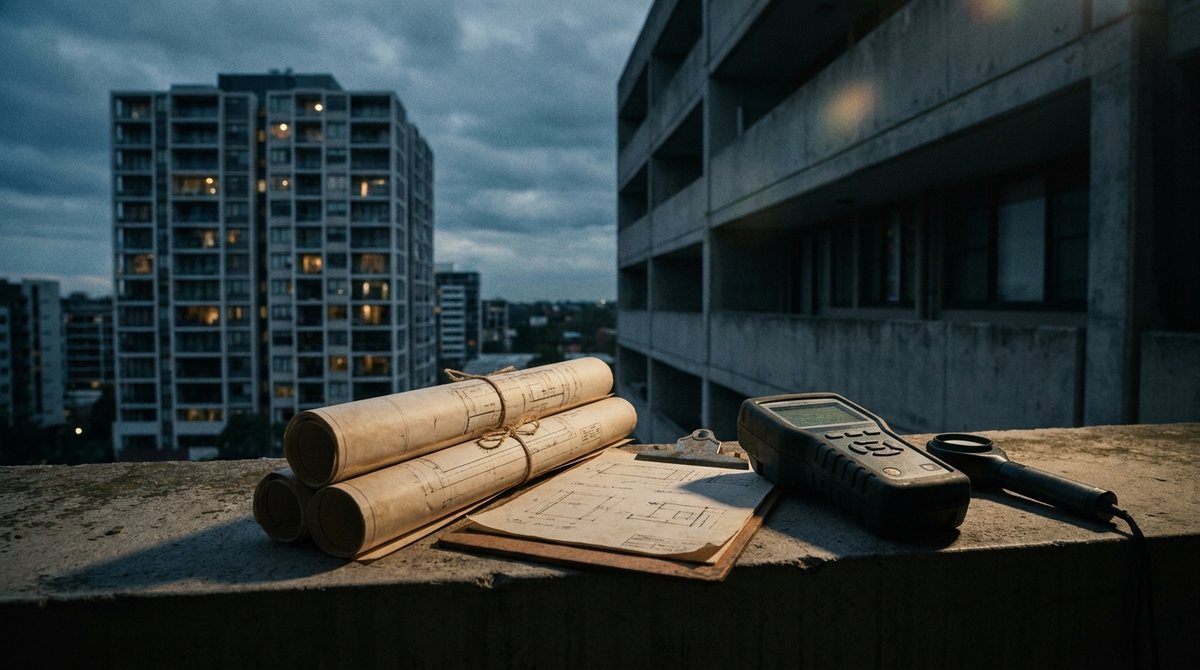
Why three remedial scopes for the same building look nothing alike
Same building, same brief, three scopes that read like three different jobs. The gap is not margin. It is what each contractor diagnosed and chose to address. Here's how to read it.
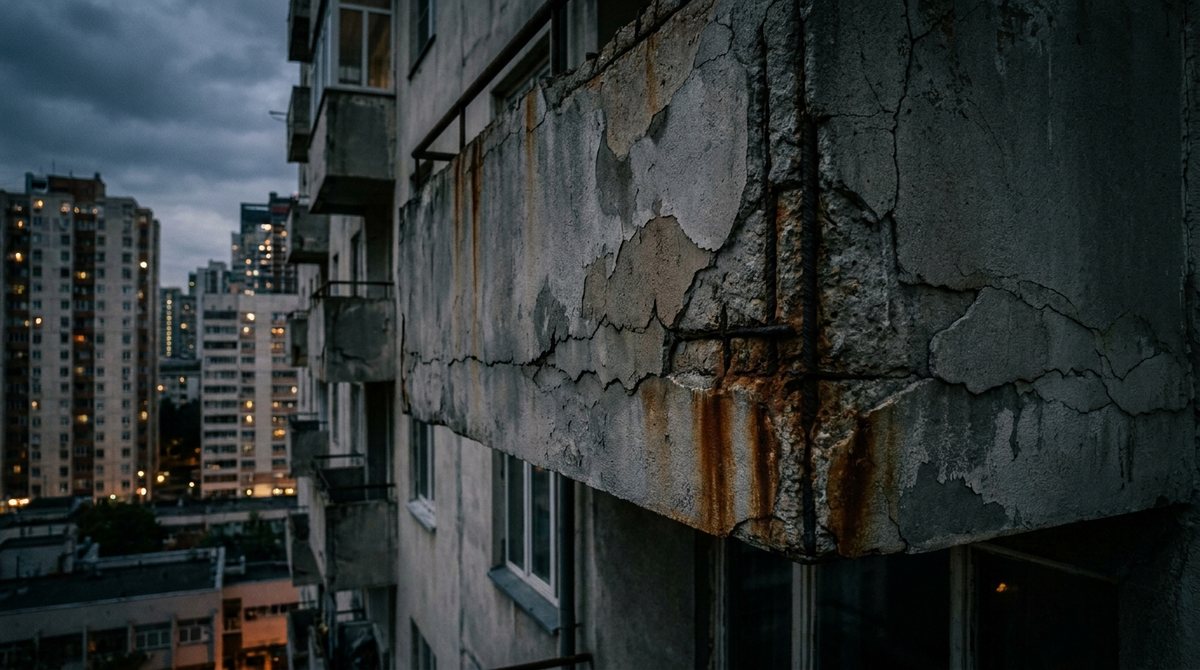
Reading a remedial scope of works: a strata committee guide
Twelve line items the OC committee should look for on every remedial scope of works before approving a major spend. A plain-English guide for volunteer apartment owners.
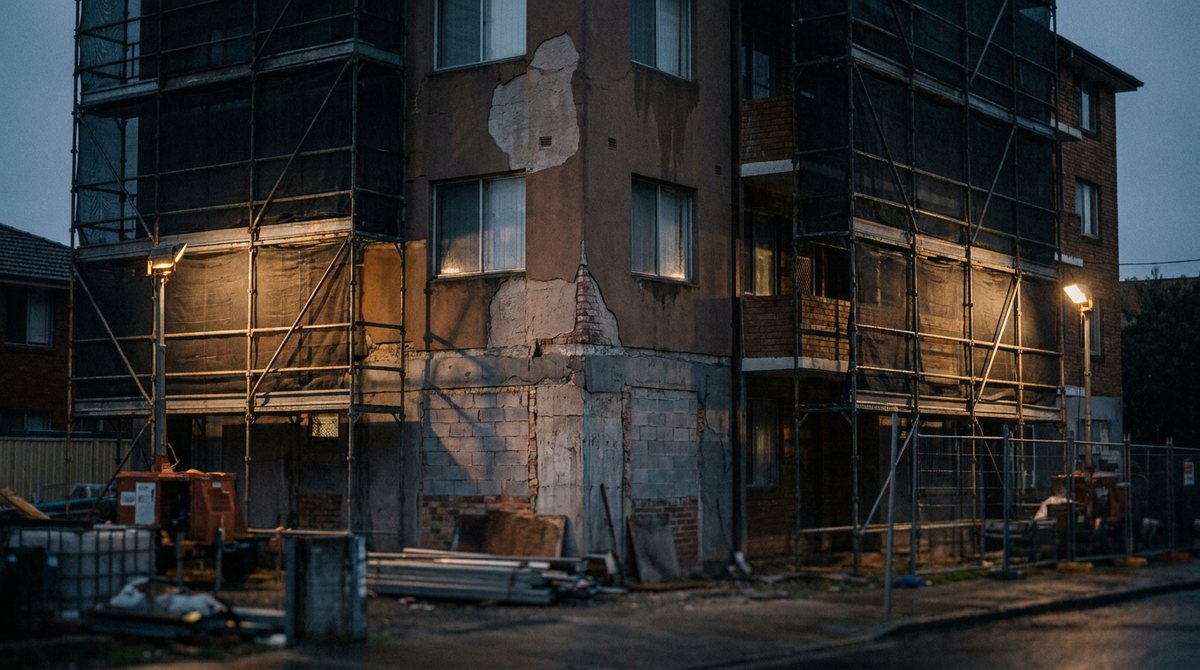
Facade defects in Sydney apartments built 2005 to 2015: the common patterns
Render cracks at slab edges, sealant joints letting weather past, paint failing across whole elevations. A field guide to facade defects in Sydney's mid-rise strata stock.
Why three decades behind a remedial director matters
Three decades of construction heritage behind a director-led remedial firm. How the family backbone changes the way a major scope gets walked, written, and delivered.
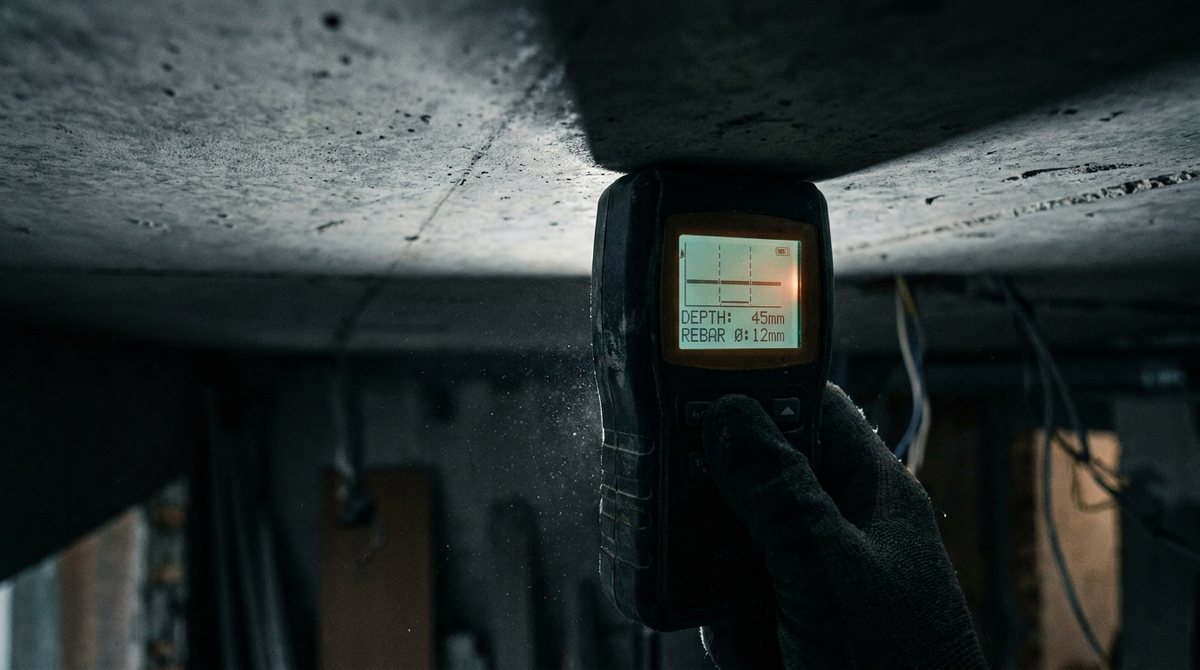
How a cover meter finds reinforcement depth before you break out
Before a concrete cancer scope is written, a cover meter maps where the steel sits and how deep the cover runs. Here's how the survey works and why it changes the scope.
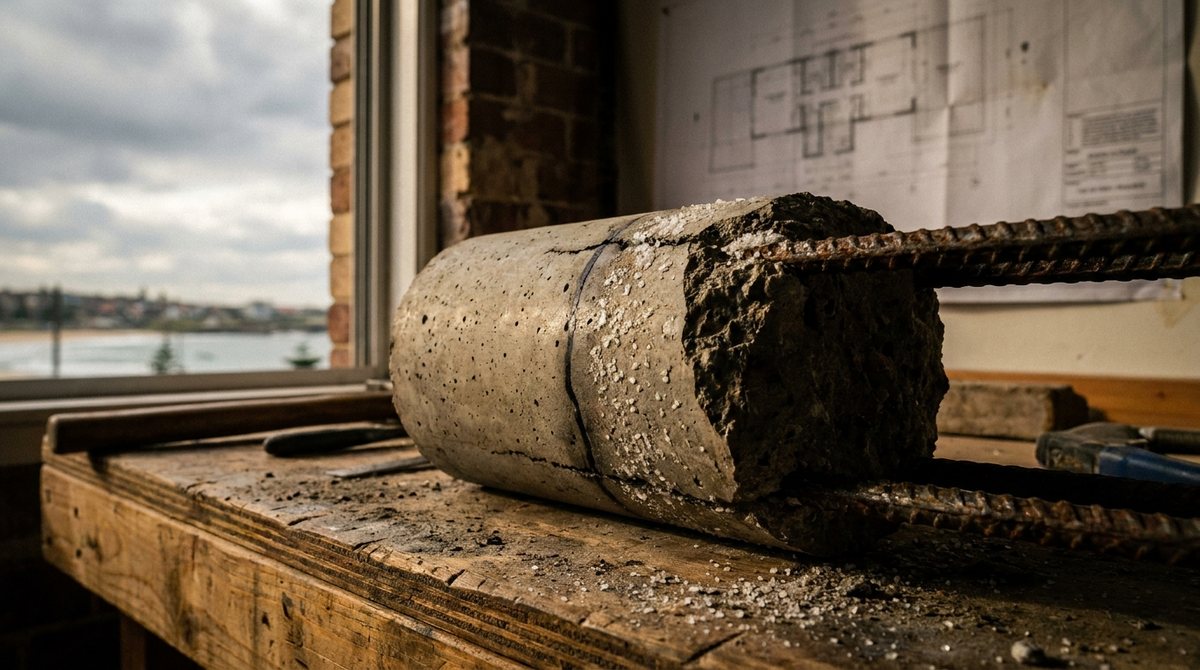
Chloride attack versus carbonation: two paths to concrete cancer
Concrete cancer in a Bondi balcony and a Parramatta carpark can have two different causes. Chloride-driven and carbonation-driven corrosion need different rectification. Here's the difference.
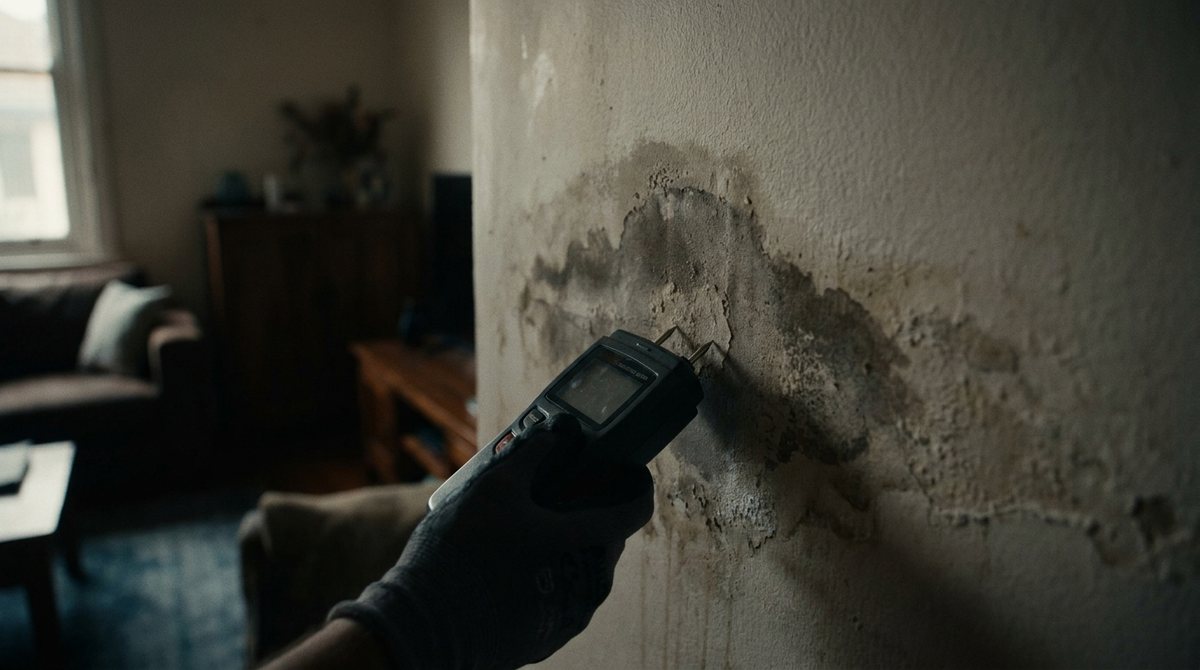
How moisture mapping locates the true leak source
A stain in a Mosman bedroom ceiling rarely sits under the actual leak. Moisture mapping traces the water back to where it enters. Here's how the survey finds the source.
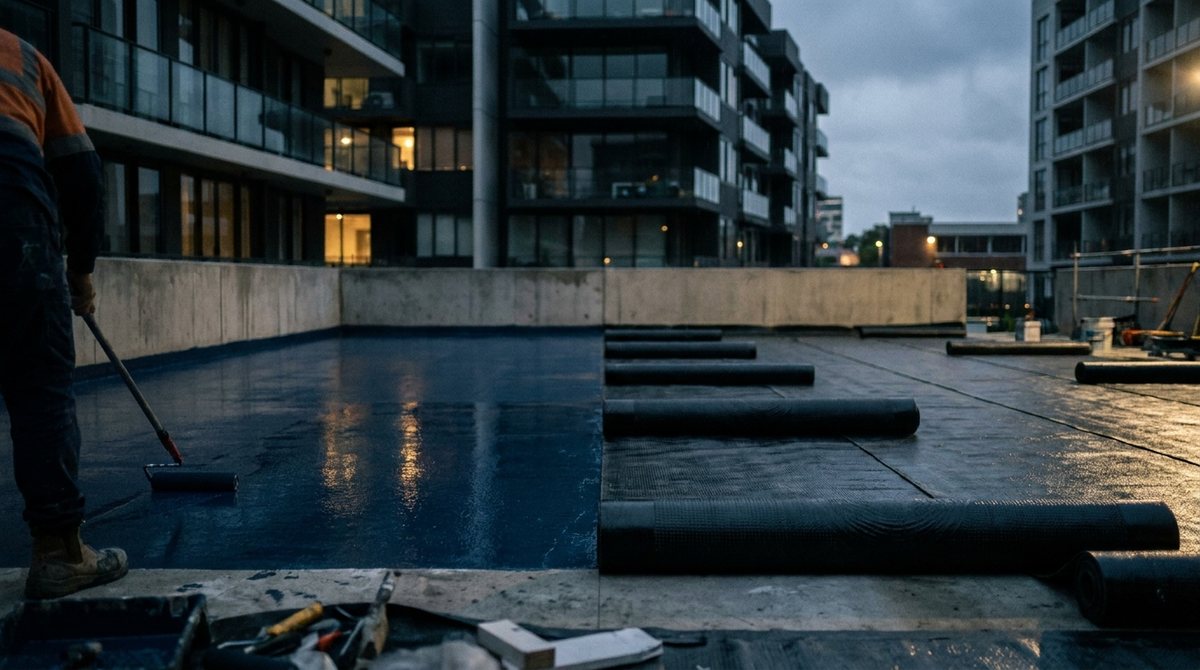
Liquid-applied versus sheet membranes: when each one belongs
A balcony, a planter box, and a podium deck do not all want the same membrane. Liquid-applied and sheet systems each have a place. Here's how the application decides the choice.
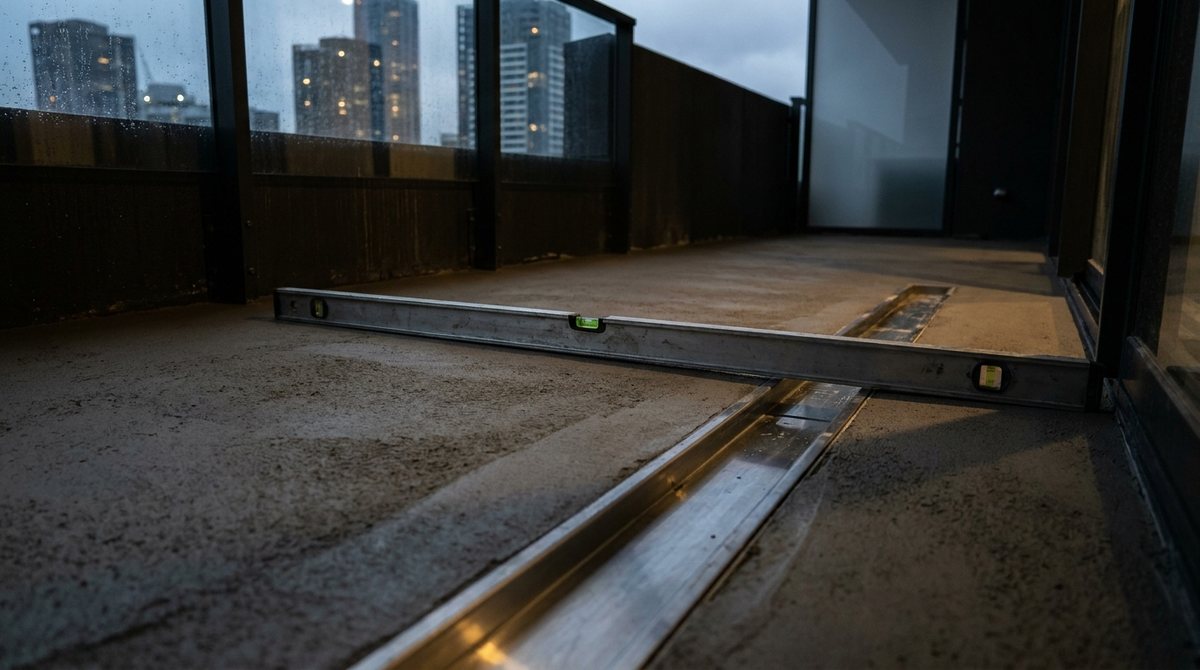
AS 4654.2 falls and drainage explained
Most balcony membranes fail because the water sits, not because the product was wrong. AS 4654.2 sets the falls and drainage that keep water moving. Here's what the standard requires.
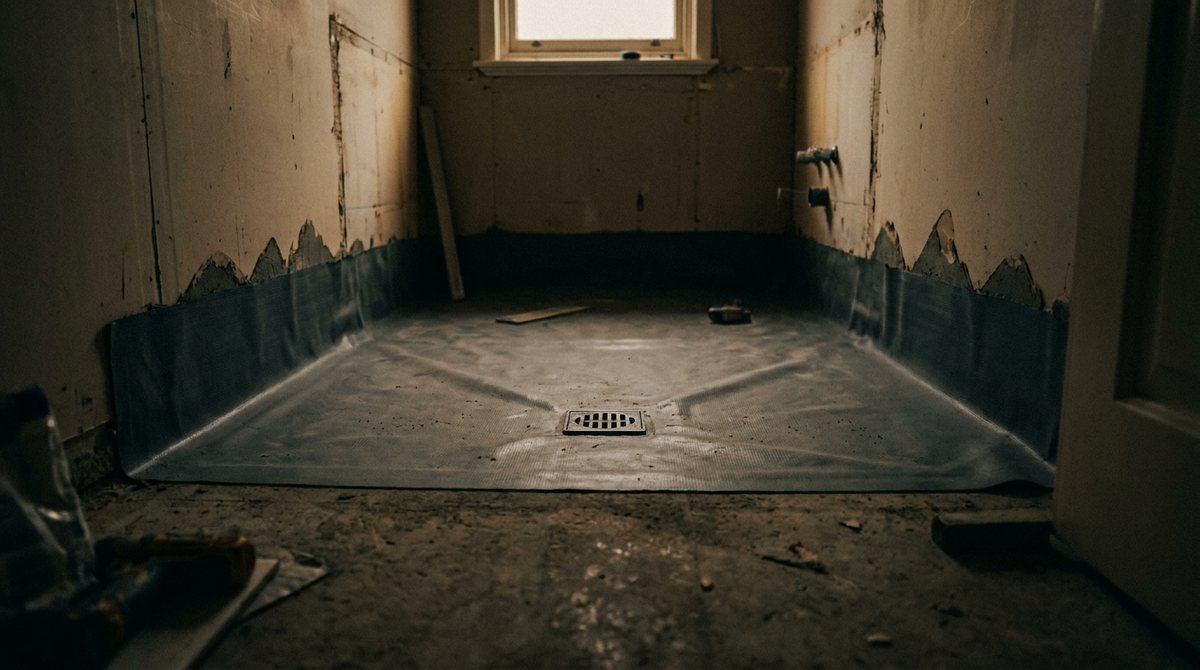
AS 3740 wet area compliance in apartments
An apartment bathroom leak into the unit below is an AS 3740 failure. The standard governs internal wet-area waterproofing. Here's what compliant detailing actually looks like.
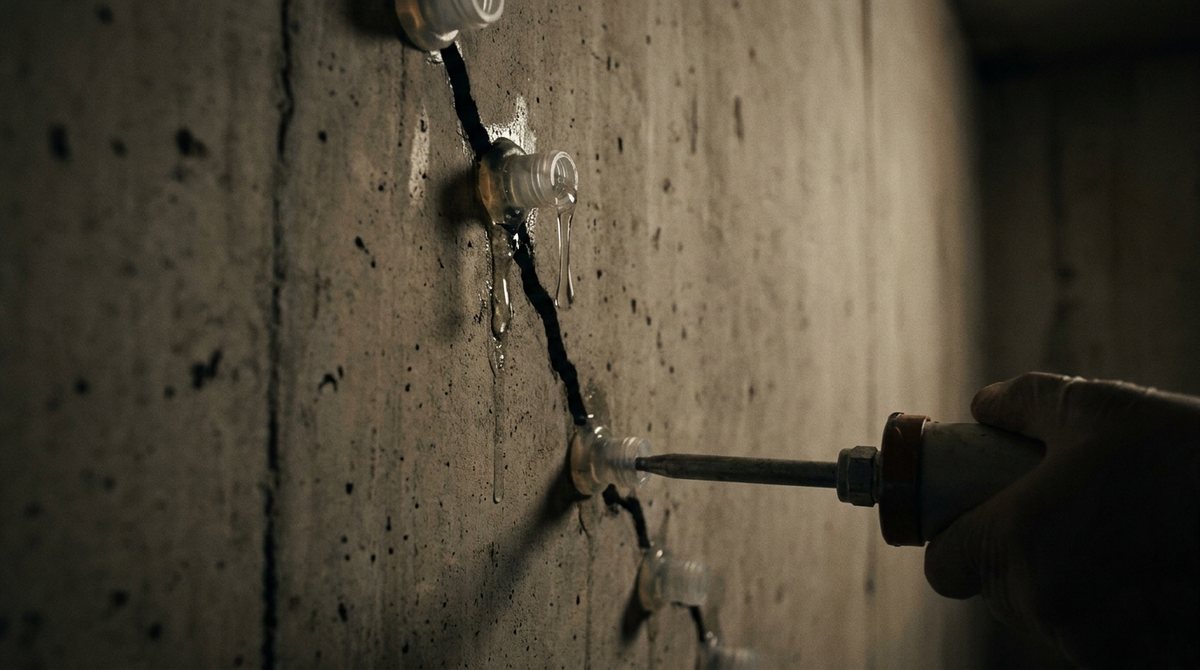
Epoxy versus polyurethane crack injection: the chemistry that decides
A crack in a concrete wall can be filled with epoxy or polyurethane. The choice is not arbitrary. Whether the crack is structural and whether it is wet decides the resin. Here's why.
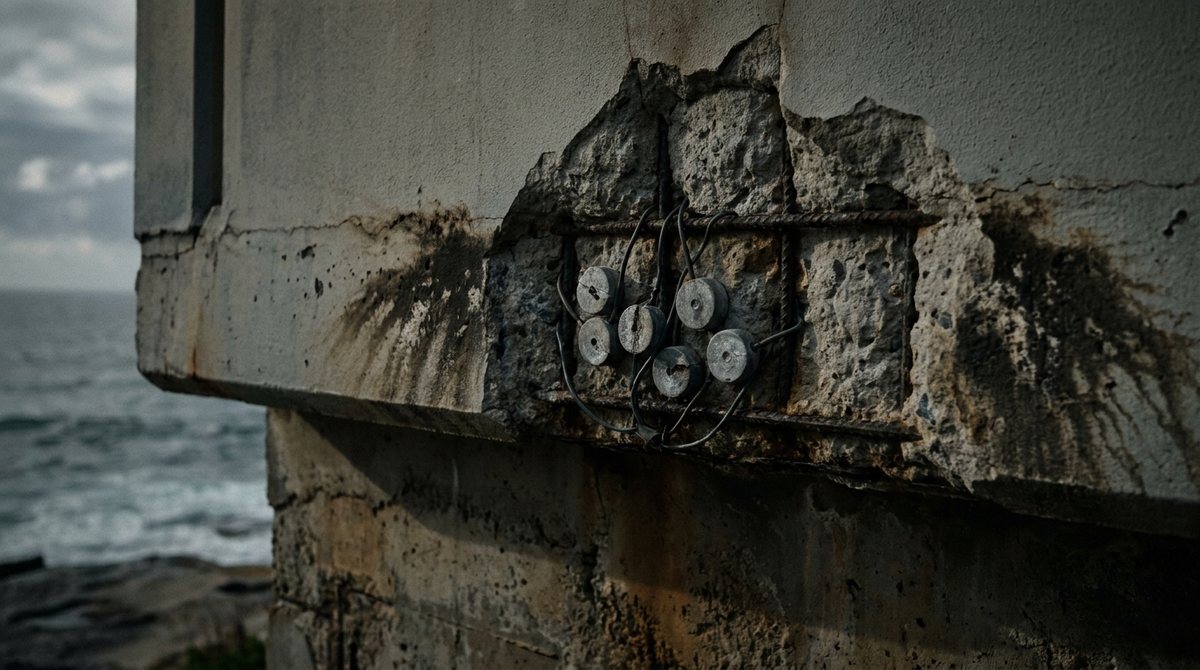
Sacrificial versus galvanic anodes in concrete repair
On chloride-attacked coastal concrete, a conventional patch can drive the next spall. Galvanic anodes interrupt the corrosion cell. Here's how cathodic protection works in a repair.
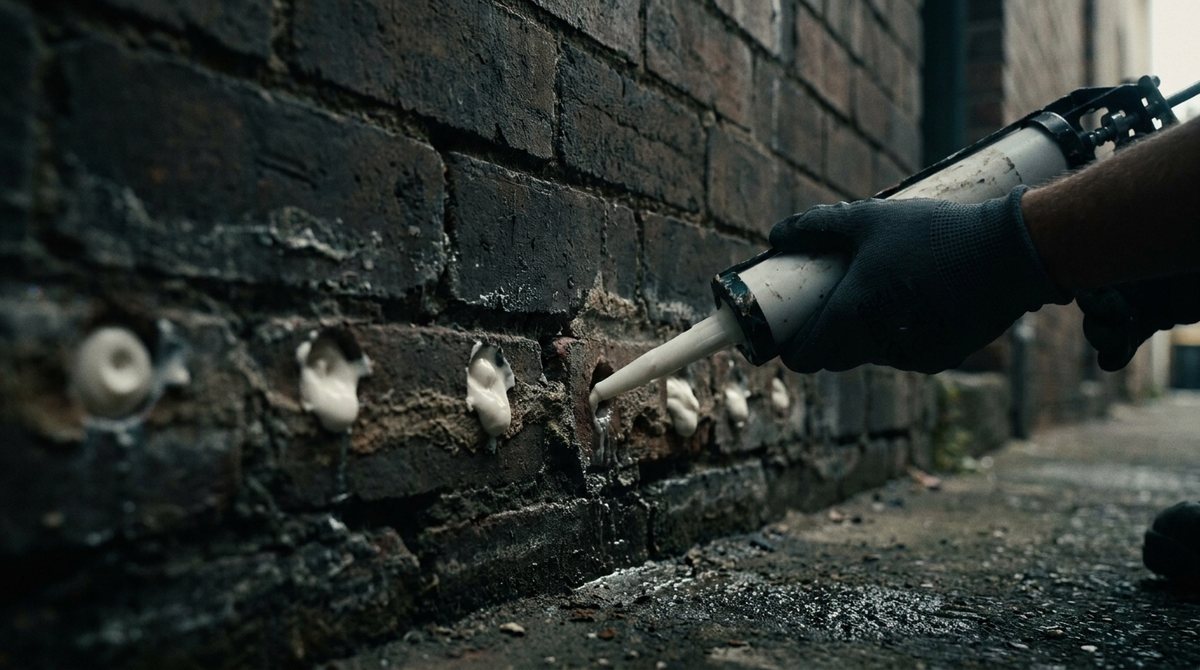
Chemical DPC chemistry: how rising damp is actually stopped
A chemical damp proof course stops capillary rise in an old terrace wall. The chemistry is a water-repellent injected into the mortar course. Here's how it forms the barrier.
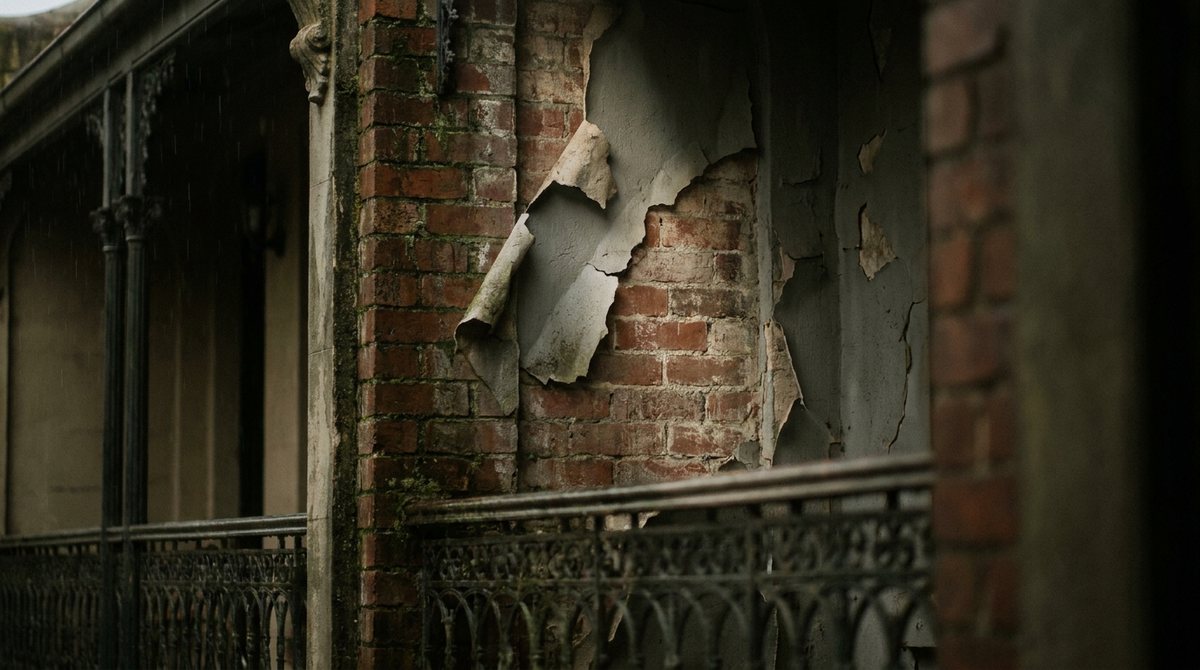
Render systems and substrate compatibility on old brick
A hard cement render on a soft old Sydney brick wall cracks and delaminates within years. Render has to match its substrate. Here's why compatibility decides whether render lasts.

Sealant movement classes: why class 25 matters on a facade
A facade joint moves with every hot day and cold night. A sealant rated below the joint's movement tears. Class 25 sealant and the right joint design are what hold. Here's the logic.
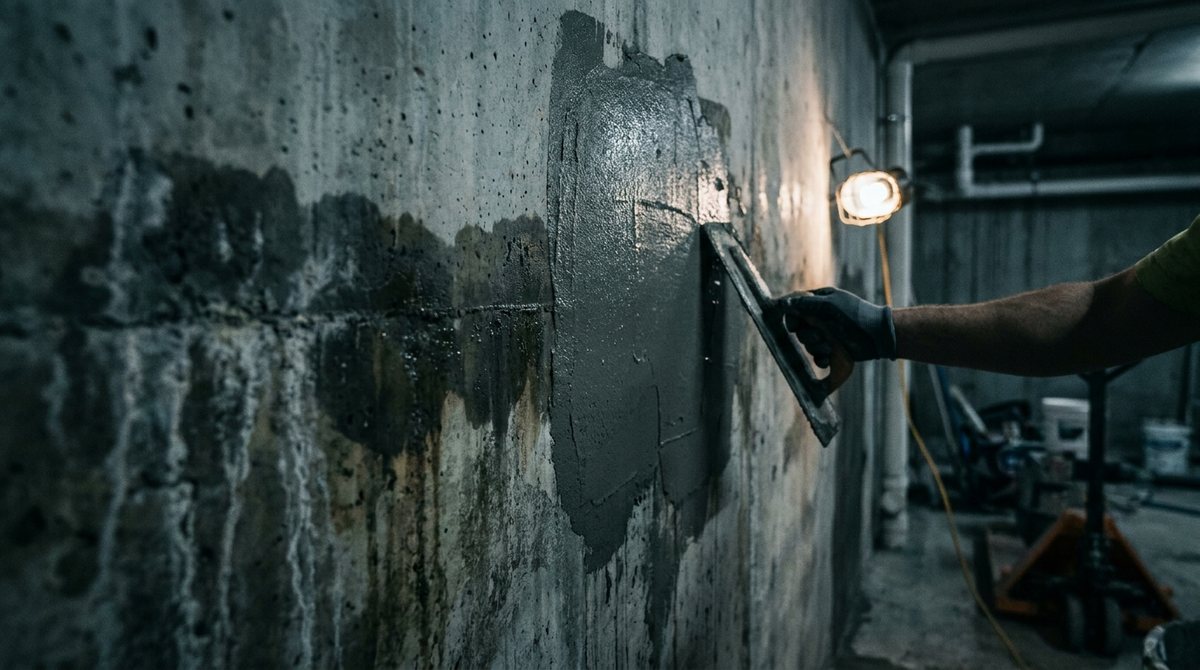
Negative-side waterproofing: why it is a last resort
When you cannot get to the outside of a leaking basement wall, negative-side waterproofing works from within. It can hold back water, but it does not protect the structure. Here's the trade-off.
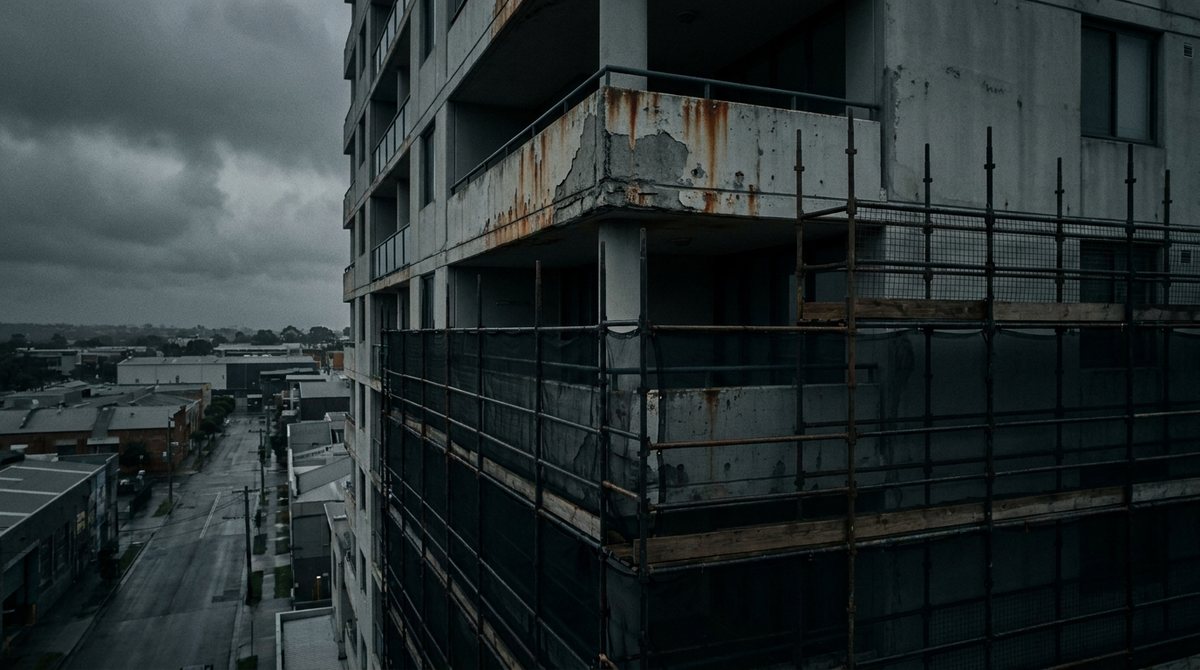
Defects in 2000 to 2010 Sydney strata towers: the pattern by floor
Sydney's 2000 to 2010 strata towers fail in a predictable order. Membranes first, then concrete, then facade. Here's the defect timeline by building element for that decade of stock.
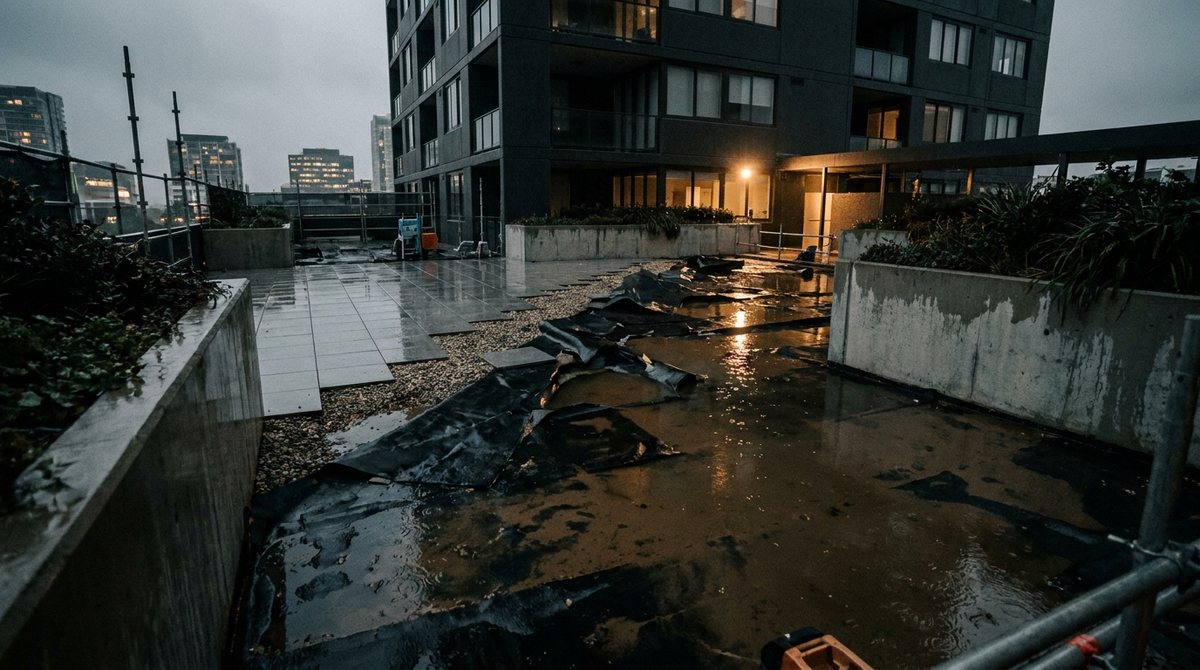
2010 to 2020 mid-rise membrane failures across Sydney
Sydney's 2010 to 2020 mid-rise stock is reaching the age where balcony and podium membranes fail. Here's where the water shows up first in that decade of buildings, and why.
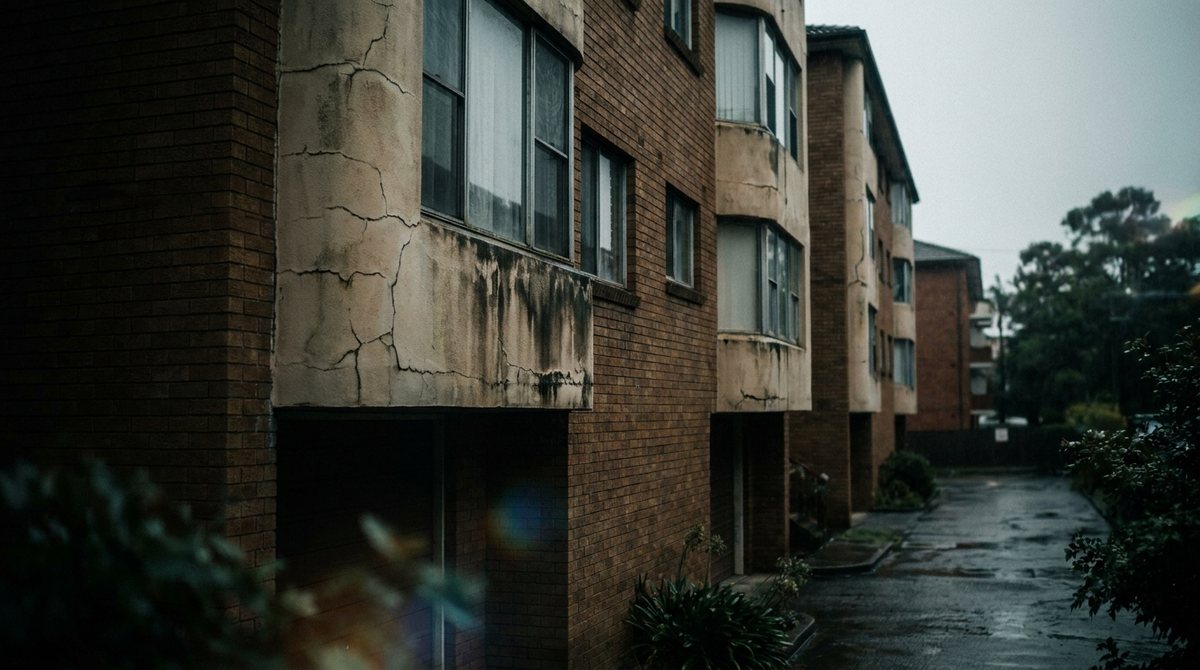
1960s to 1980s walk-up render fatigue across Sydney
Sydney's red-brick walk-up flats from the 1960s to 1980s share a render fatigue pattern. Cracked and drummy render, spalling balconies, tired concrete. Here's what that older stock needs.
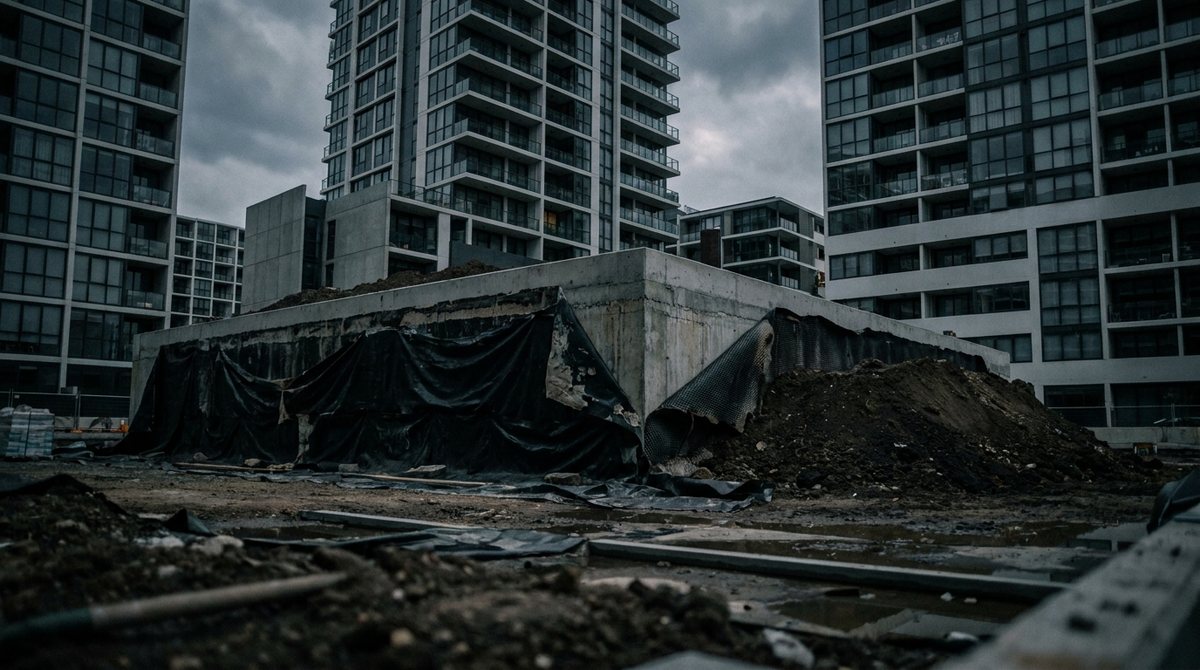
Podium and planter box failures on 2010s developments
The landscaped podium was the signature of Sydney's 2010s developments. Now those podium and planter membranes are failing into the carpark below. Here's the pattern and the fix.
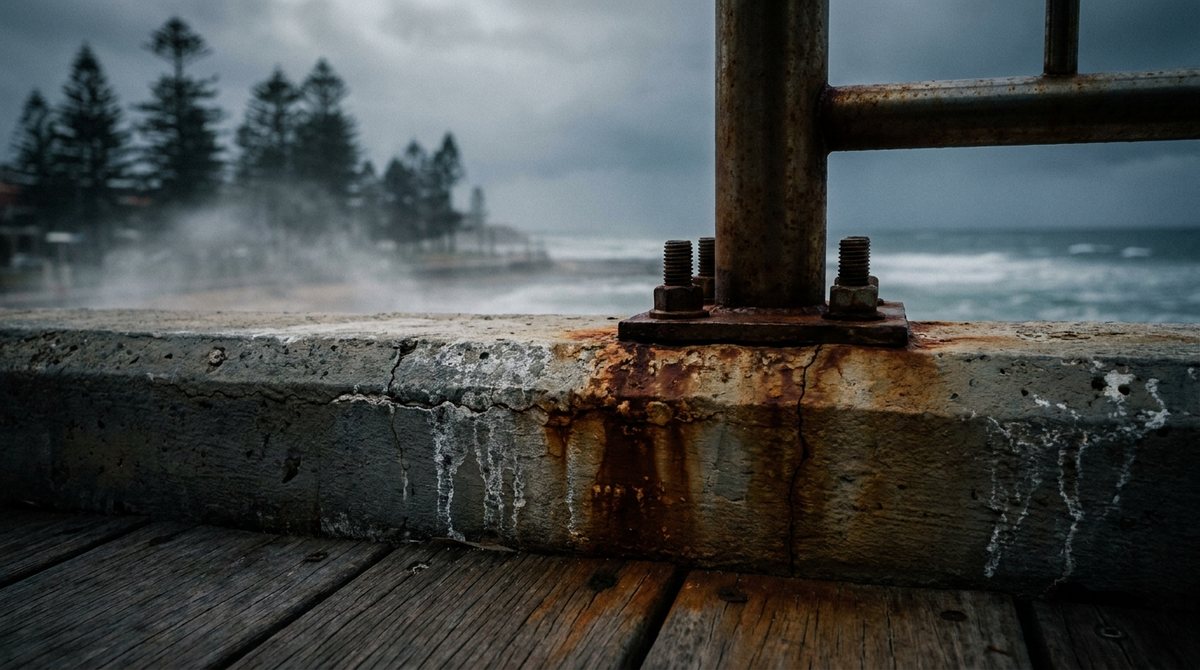
Balcony balustrade fixing corrosion in coastal Sydney
A loose balcony balustrade on a coastal Sydney apartment is often a corrosion problem at the fixing, not a fastening problem. Here's how salt air attacks the fixing and why it is a safety issue.
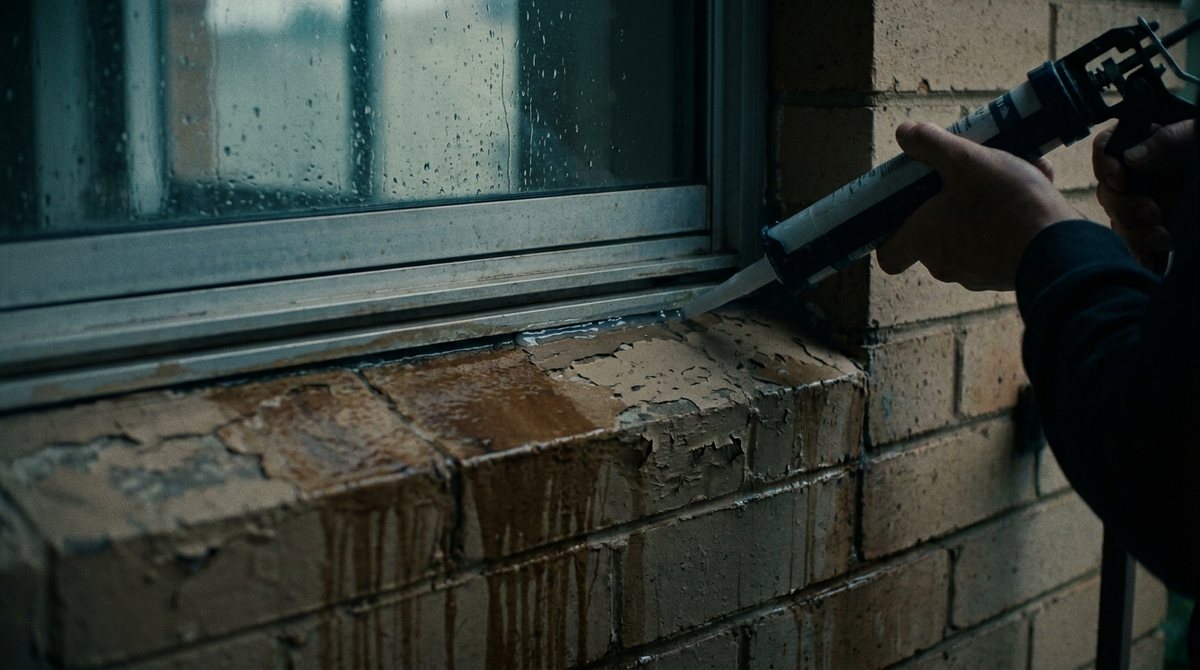
Window head and sill leak patterns in Sydney apartments
Water staining beside an apartment window usually enters at the head or the sill, not the glass. Here's how window leaks track in Sydney apartments and what the rectification addresses.
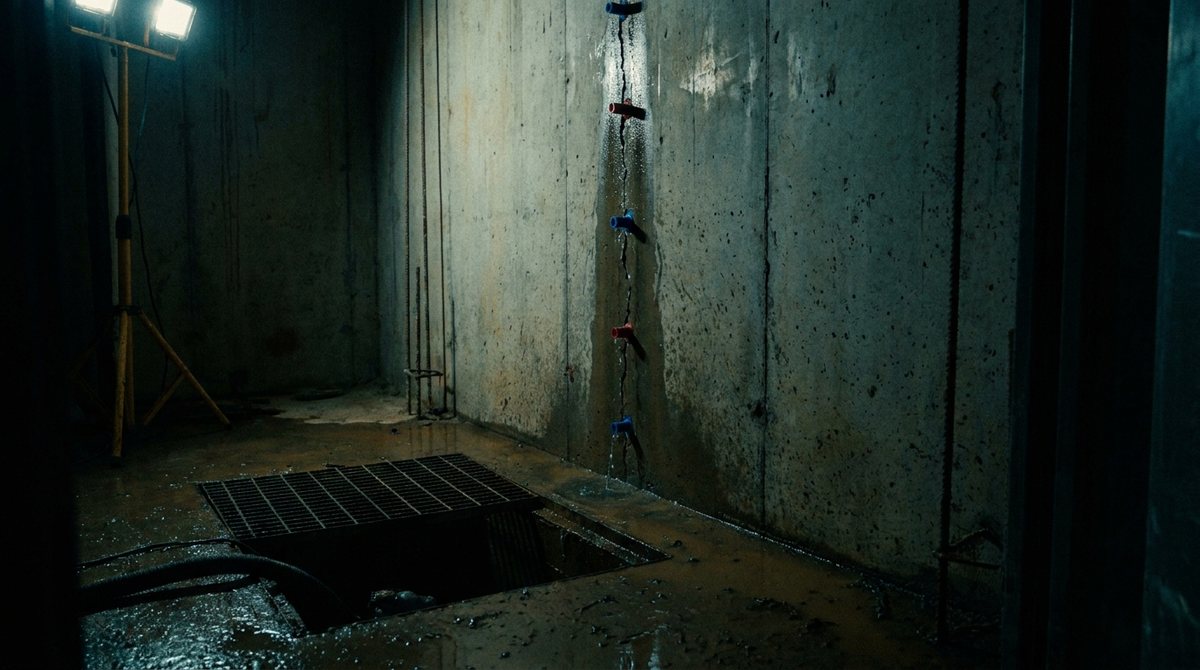
Basement and lift-pit water ingress in Sydney apartments
Water in a Sydney apartment basement or lift pit is a hydrostatic problem, not a surface one. Here's why below-ground water enters, and how crack injection and tanking address it.
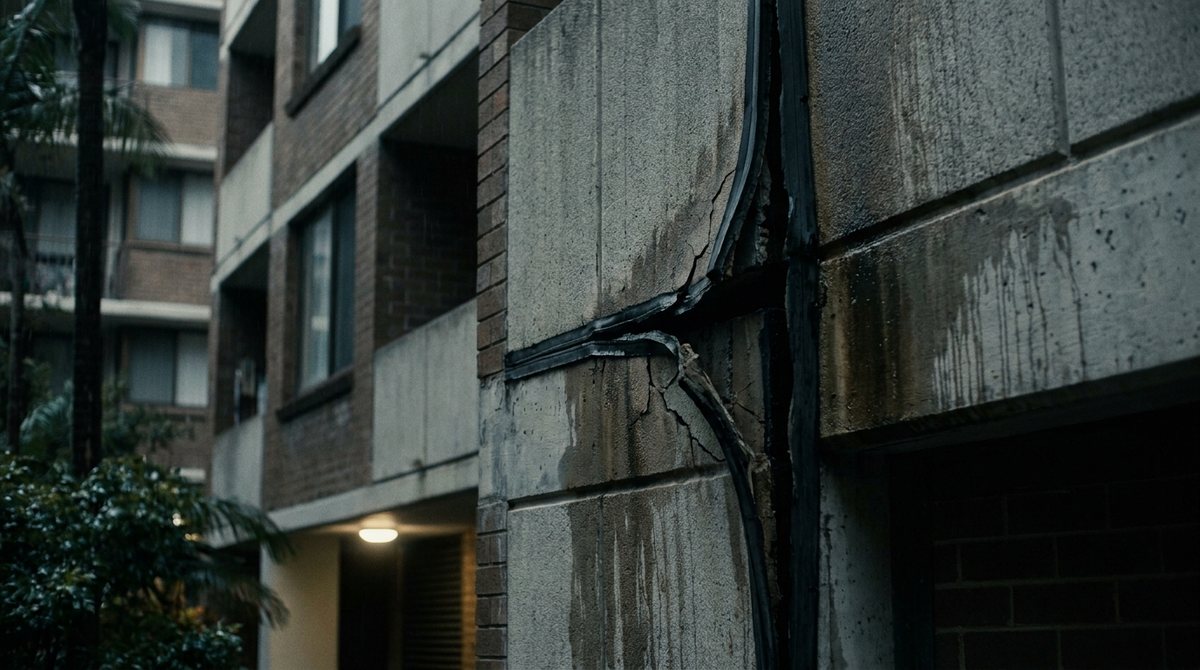
Expansion joint failures in mid-rise Sydney buildings
An expansion joint lets a building move without cracking. When the joint seal fails, water gets in and the cracking starts anyway. Here's why mid-rise Sydney expansion joints fail and how they are rectified.
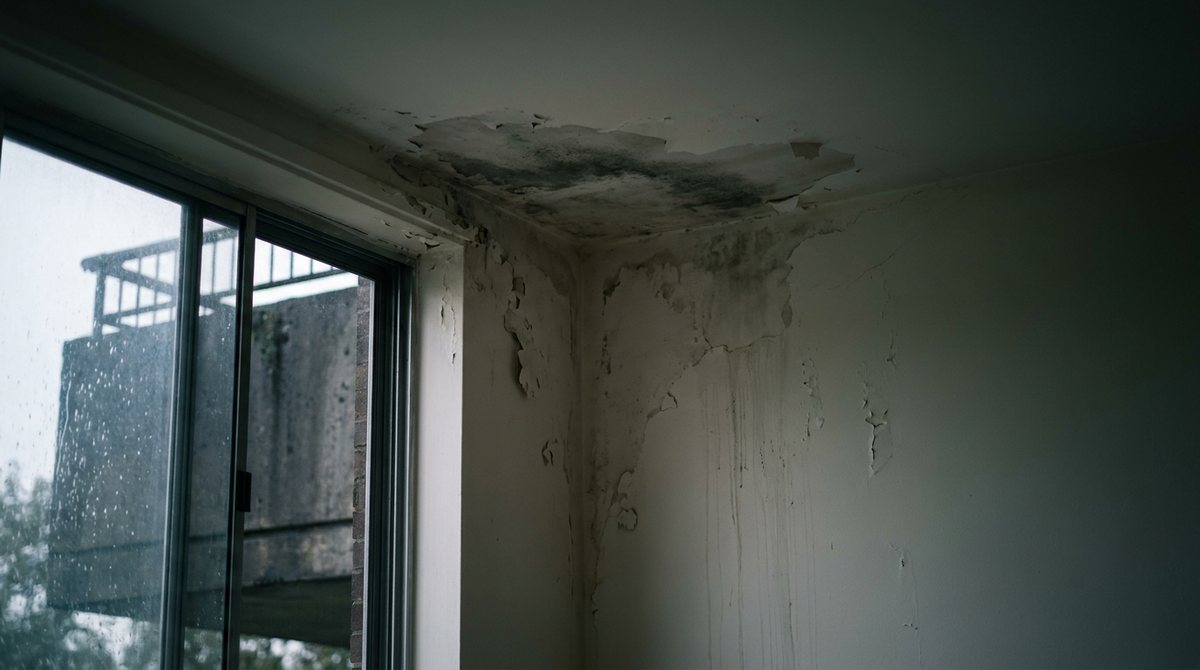
How to brief a remedial scope to an owners corporation
Getting a remedial scope approved at an AGM is a briefing problem. A volunteer committee approves what it understands. Here's how to present a scope so the owners corporation can decide.
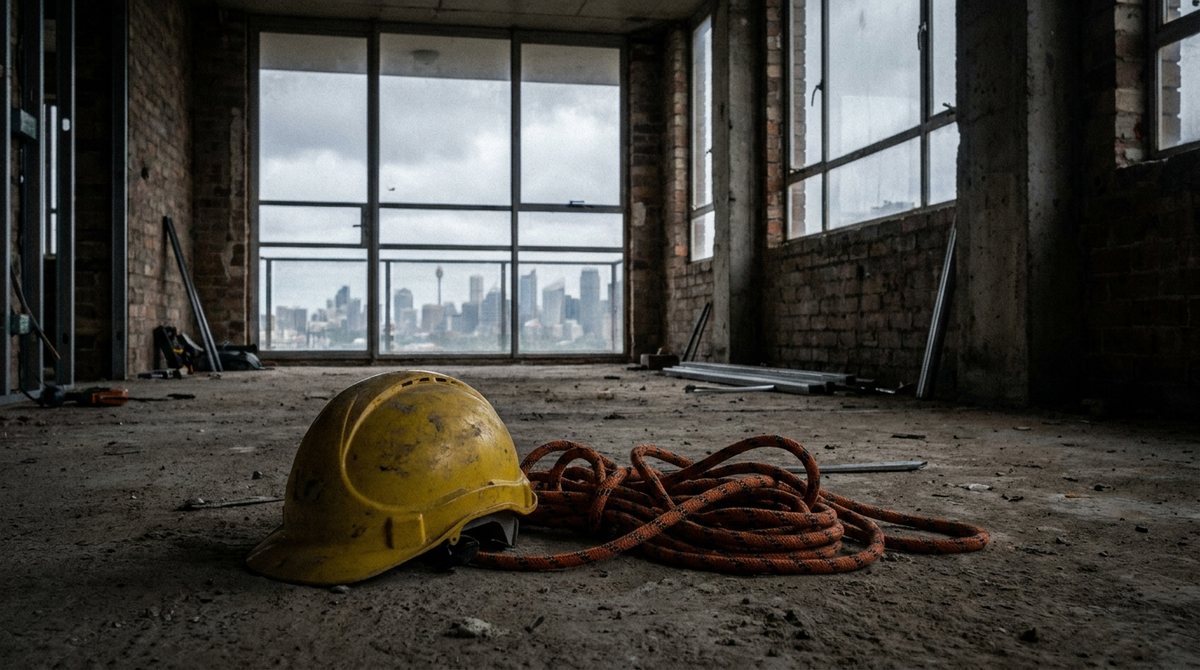
Defects liability periods explained for strata committees
A defects liability period is the window where the contractor fixes what fails, free. In NSW it sits alongside statutory warranties under the Home Building Act. Here's what a committee should know.
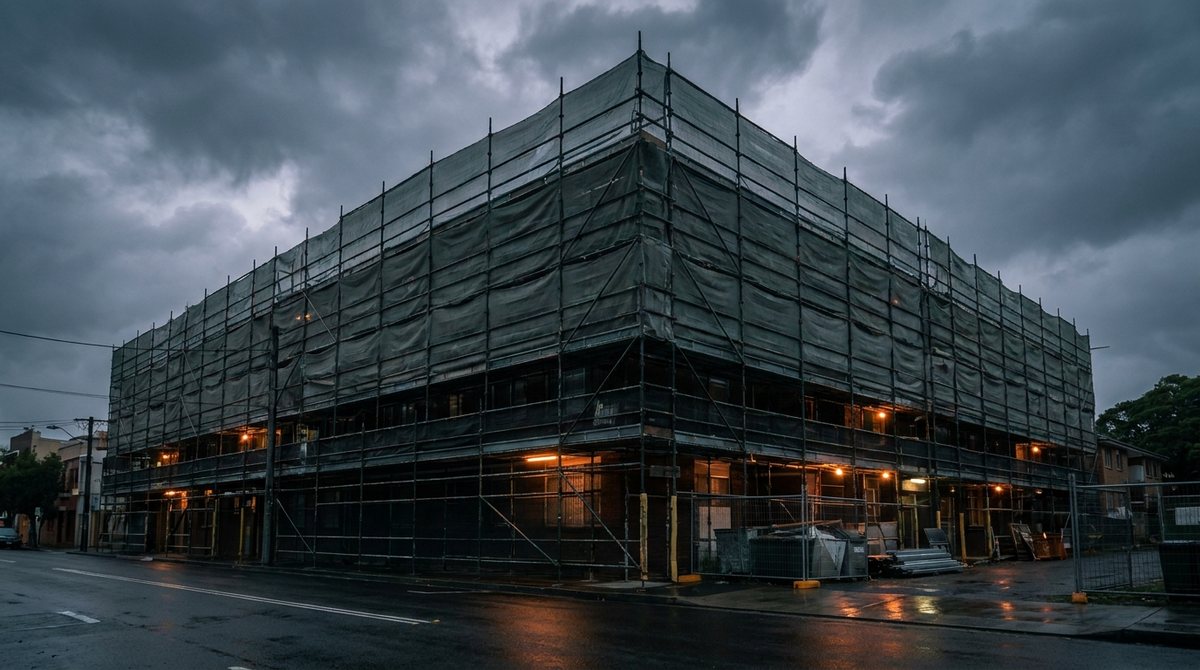
Coordinating remedial works around residents
A remedial programme runs in an occupied building. Noise, access, dust, and balconies offline all land on residents. Here's how good coordination keeps a strata project from becoming a complaint storm.

Presenting a major remedial programme across an AGM cycle
A building-wide remedial programme rarely gets approved in one motion. It moves through the AGM cycle in stages. Here's how a strata manager sequences a major programme through the meeting calendar.
What a condition report should contain for strata
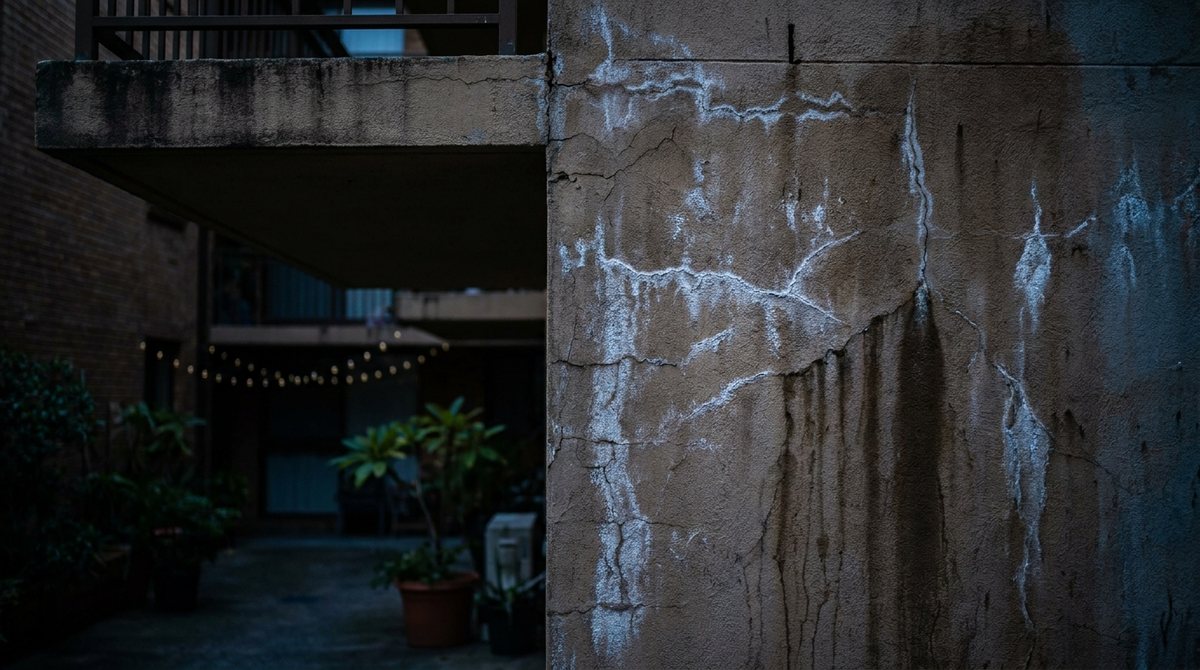
A condition report is the evidence base for a remedial programme. Done to AS 4349.1, it documents the defects a committee acts on. Here's what a useful condition report actually contains.

Staging a building-wide remedial programme
A building-wide remedial programme is delivered in stages, not all at once. The sequence is set by urgency, access, and disruption. Here's how a major programme is staged for delivery.

Engaging a remedial specialist versus a general builder
A general builder builds new. A remedial specialist diagnoses and rectifies existing defects. They are different disciplines. Here's why the distinction matters when a strata building has a defect.
The building manager's role in a remedial programme
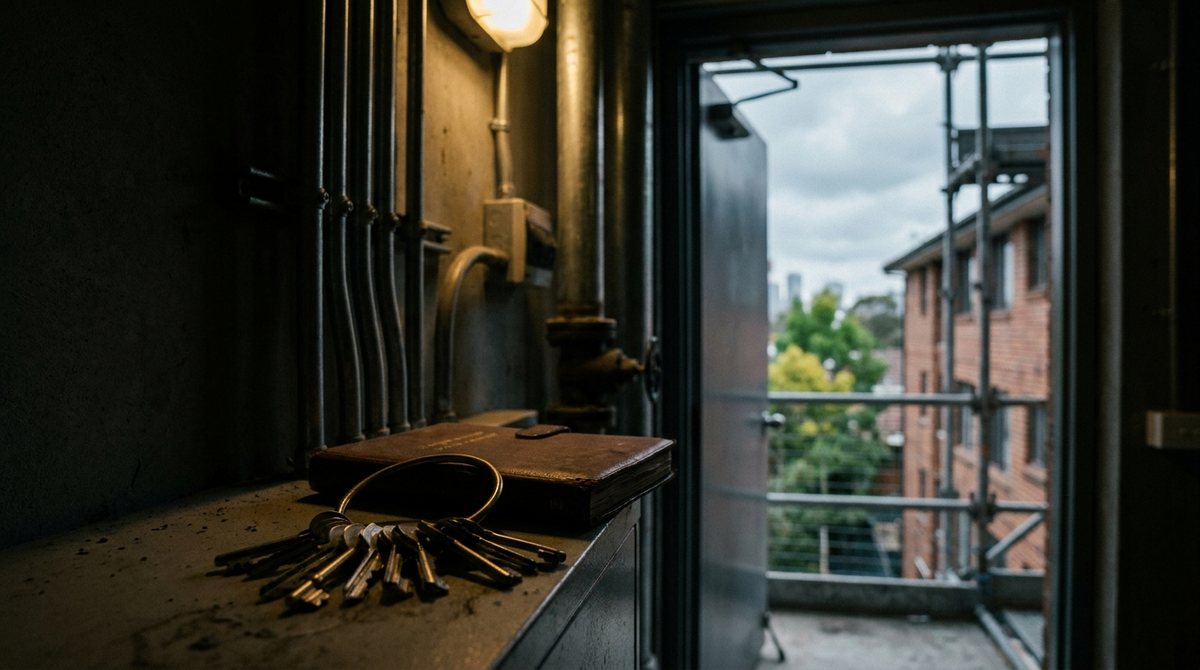
The strata manager selects the contractor, but the building manager lives with the works on site every day. Here's why the building manager's role makes or breaks a remedial programme.
The remedial realities of inner west terraces
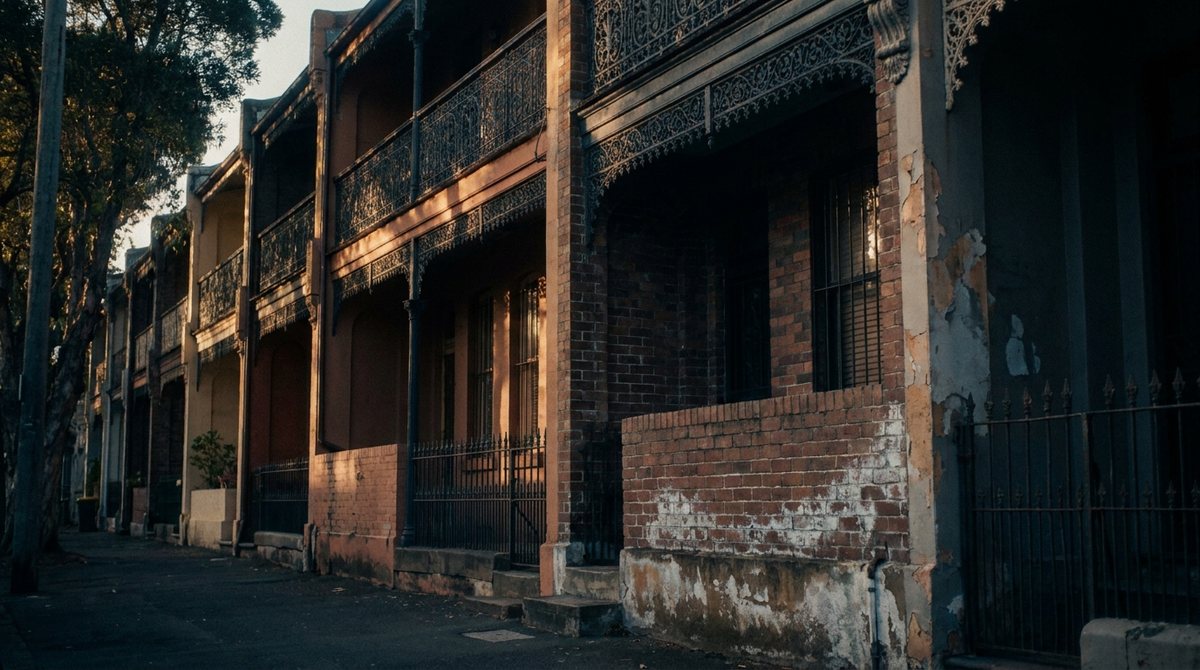
Inner west terraces in Newtown, Glebe, and Annandale share a remedial profile, damp, old brick, heritage detail. Here's what a century-old terrace actually needs from a remedial scope.
Lower north shore apartment maintenance realities
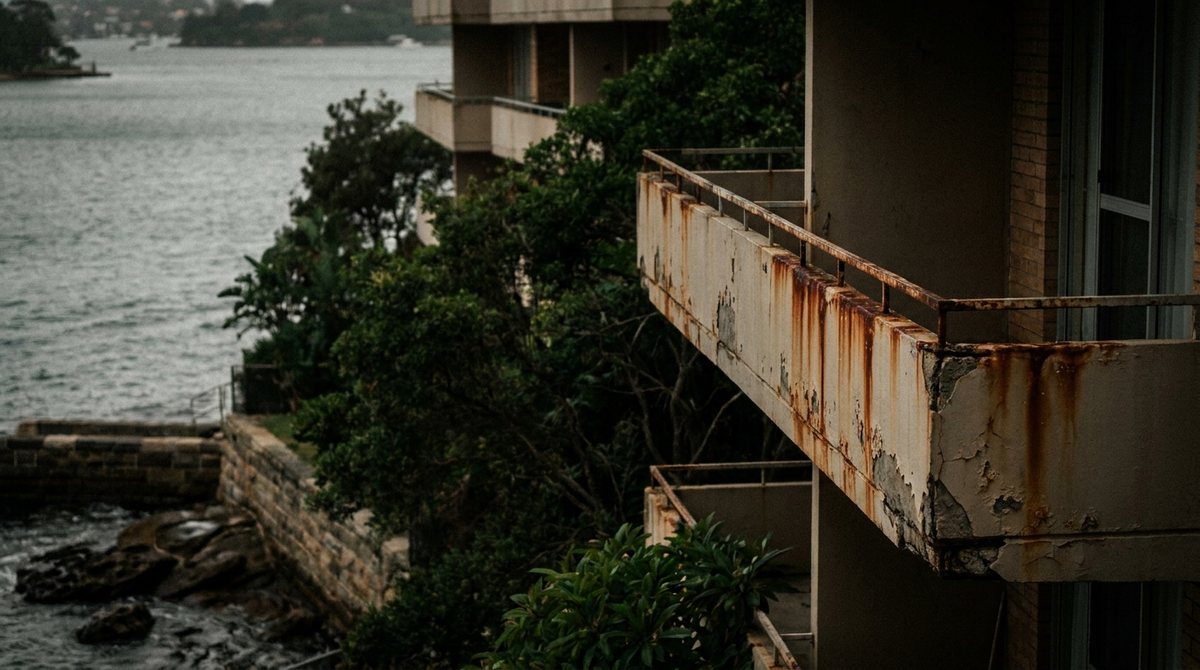
Lower north shore apartments in Mosman, Cremorne, and Neutral Bay mix harbourside exposure with a wide span of building eras. Here's the remedial profile of north shore strata stock.
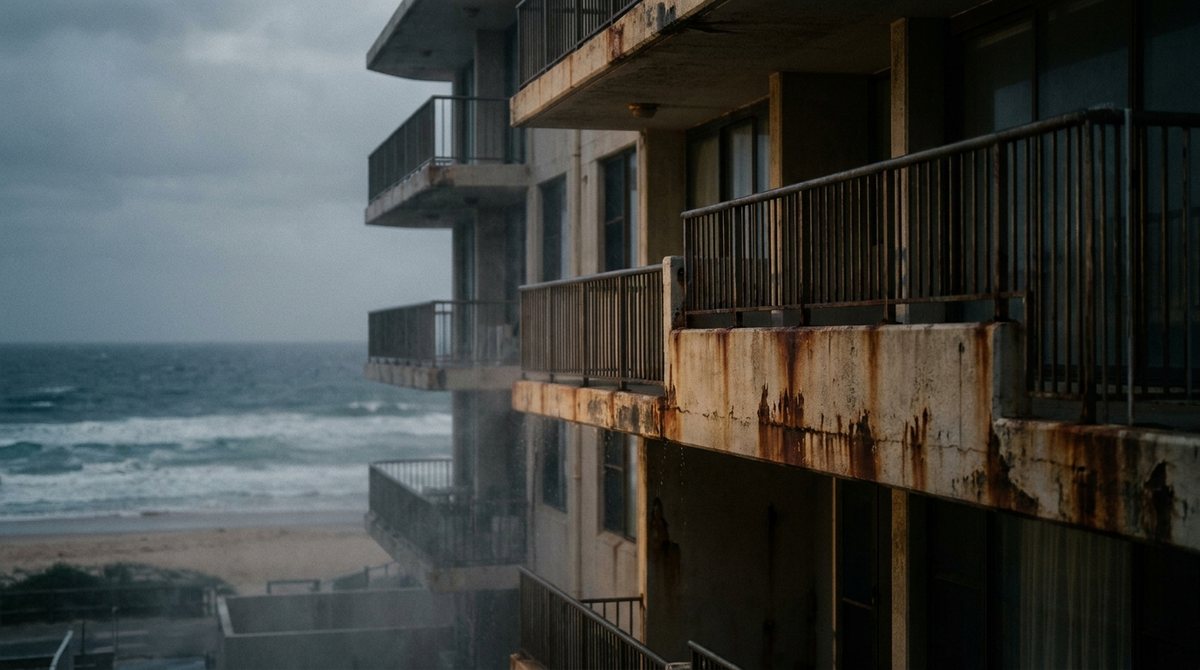
Sutherland Shire coastal exposure and apartment defects
Cronulla and the Sutherland Shire beaches put apartment buildings in a high-salt environment. Here's how coastal exposure shapes the defect profile of shire strata stock, and what it needs.
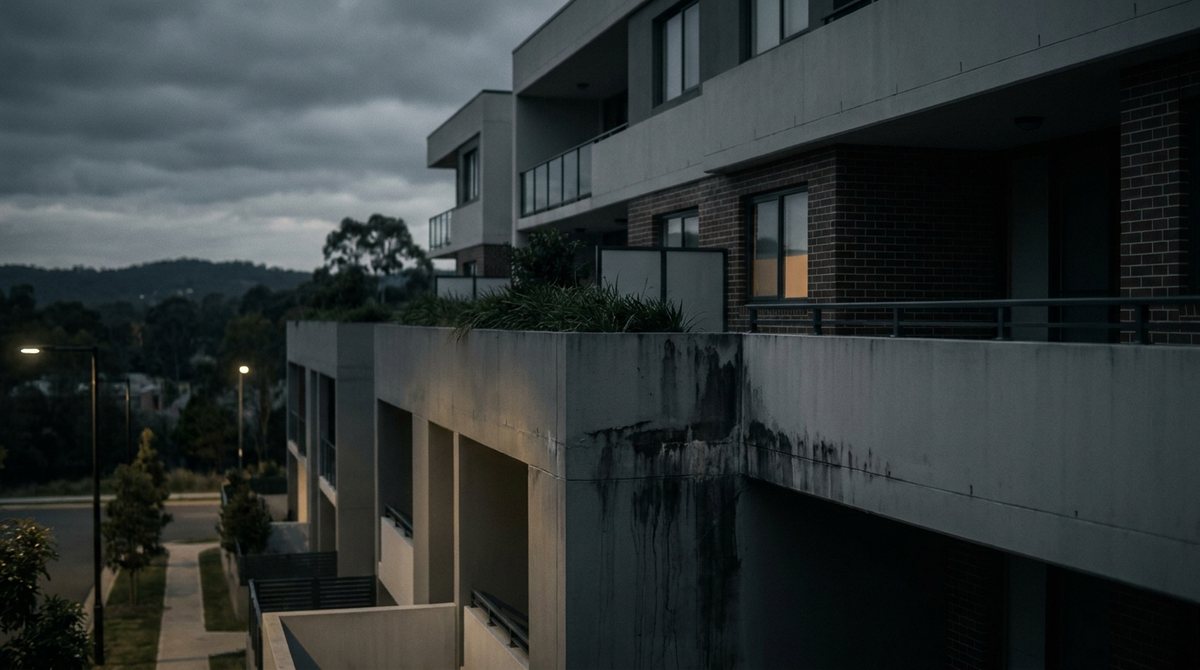
Hills district newer stock and its early defects
The Hills district built a wave of apartments in the 2010s around the metro. That stock is recent enough that its first defects are membrane and detailing issues. Here's the profile.
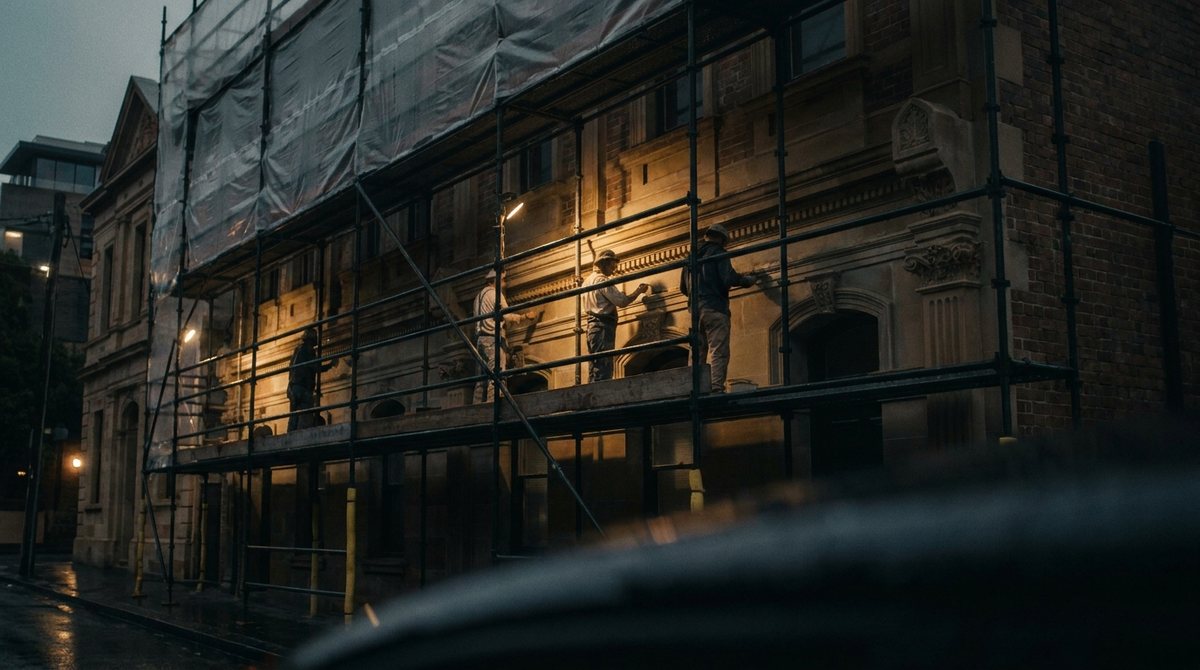
Managing heritage-overlay remedial work in Sydney
A heritage-listed Sydney building still leaks, cracks, and suffers concrete cancer. But the remedial work runs under conservation controls. Here's how heritage overlays shape a remedial scope.
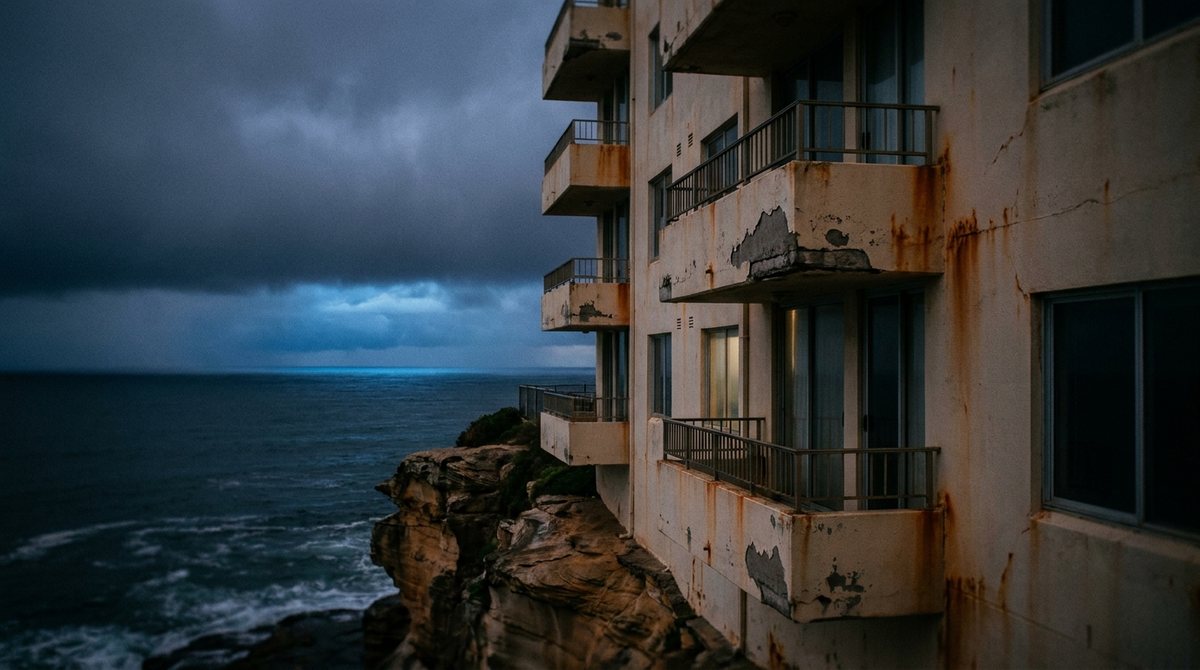
Eastern suburbs salt air corrosion in apartment blocks
Bondi, Bronte, and Coogee put apartment blocks in the harshest corrosion environment in Sydney. Salt air drives concrete cancer and metal corrosion. Here's what eastern beaches stock needs.
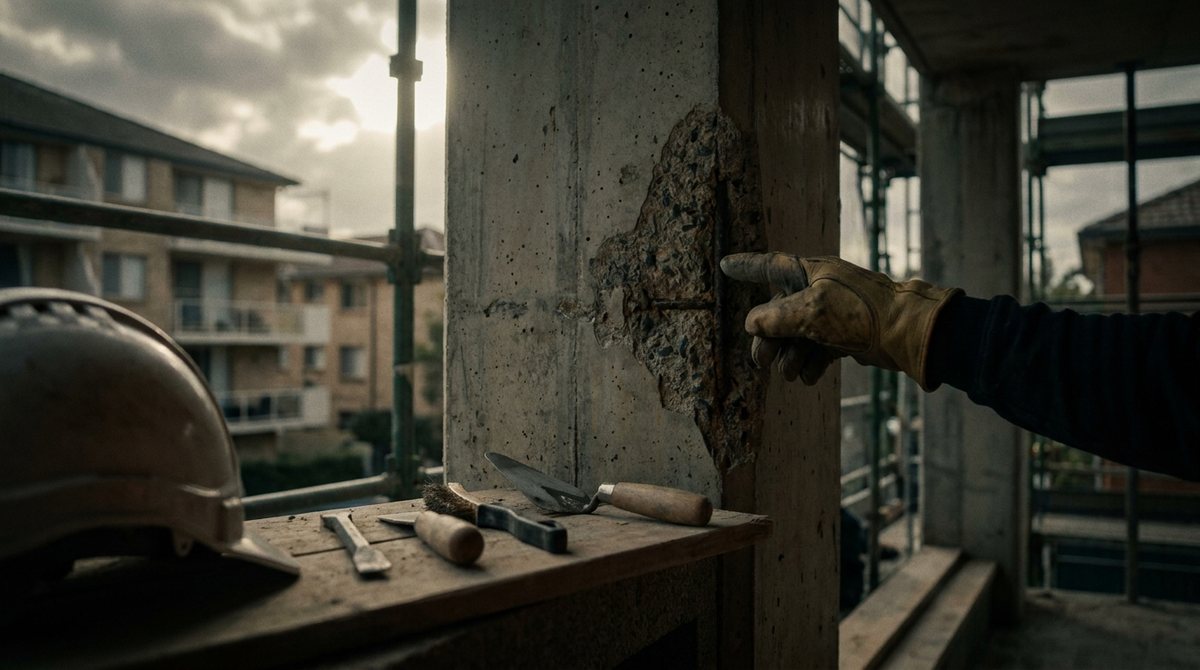
Director-led delivery: what changes when the director walks every site
On a remedial job the director who wrote the scope and the person on site are the same. Here is what that changes when the slab opens up and the unknowns surface.

How a multi-disciplinary build background sharpens remedial judgement
Pool building, luxury residential, microcement, rendering. How a multi-disciplinary construction heritage changes the way a remedial defect gets read and scoped.
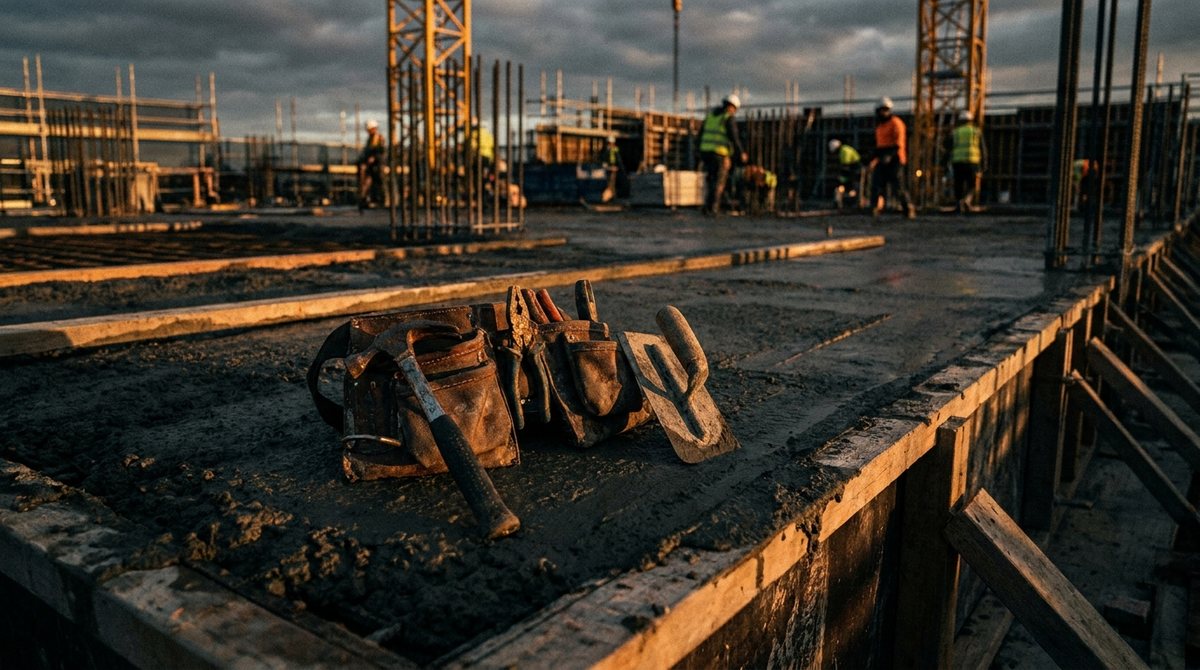
What three decades of construction heritage brings to a remedial scope
A remedial scope is only as good as the experience behind it. Here is what three decades of construction heritage actually puts into the scope of works.

One family standard from diagnosis to handover
On a remedial programme the standard at handover is set at diagnosis. Here is how one family standard holds the line across every stage of the work.
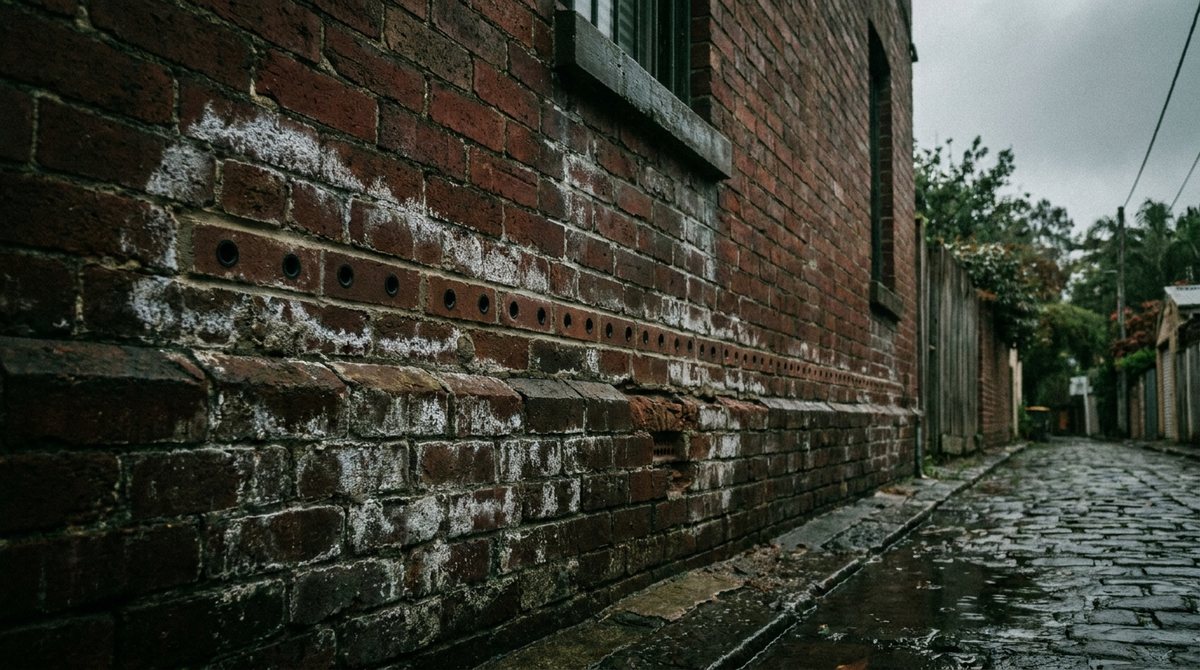
Federation and Victorian terrace damp in the inner west
Glebe, Balmain, Leichhardt, Annandale. Why pre-1920 terraces hold damp the way they do, and what a century-old wall actually needs from a remedial scope.
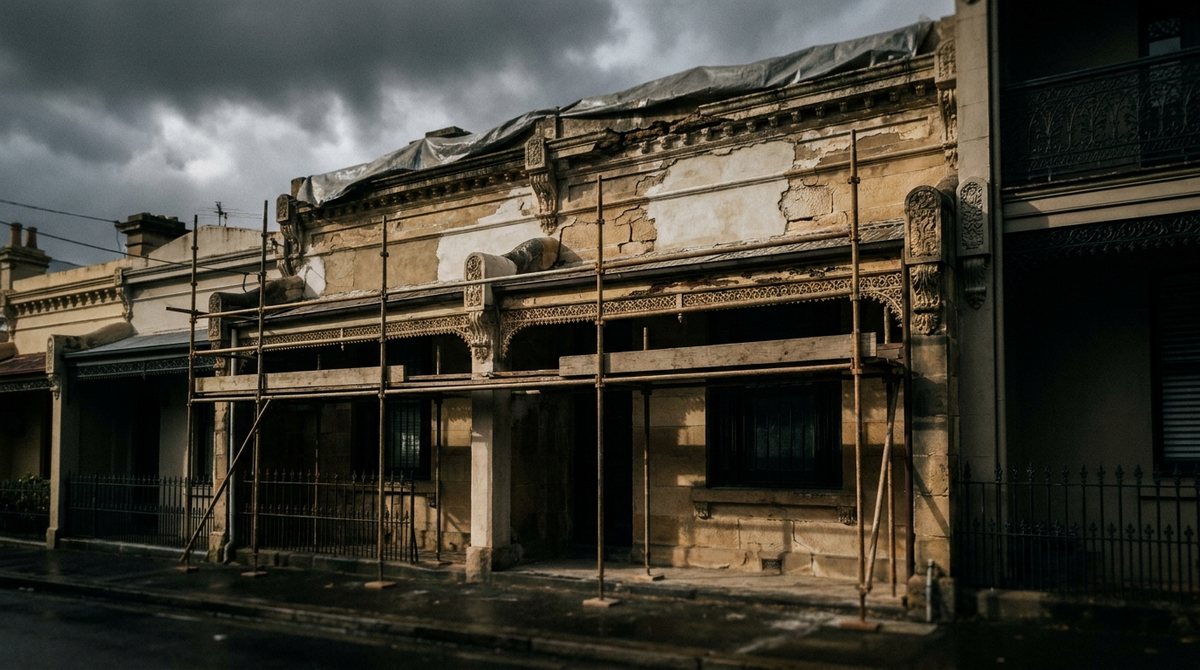
Heritage-overlay render repair on period Sydney facades
A heritage-listed Paddington facade cannot take a modern render. Here is how render repair works under a heritage overlay and why the substrate sets the rules.
Informed clients make better decisions.
At Supcon, we believe informed clients make better decisions.
Many building defects become significantly more expensive because issues remain unidentified or misunderstood for extended periods.
By sharing practical information and industry knowledge, we aim to help property owners, strata managers and consultants better understand:
- Building defects
- Waterproofing failures
- Structural deterioration
- Moisture management
- Remediation strategies
- Building performance
The more informed a stakeholder is, the better the outcome for the building.
Looking for advice on a specific building issue?
While our articles provide general guidance, every building is different. If you are dealing with a specific defect or recurring issue, Supcon can help determine the most appropriate remediation strategy. Send through the issue, photographs and any available documentation.