Render systems and substrate compatibility on old brick
A hard cement render on a soft old Sydney brick wall cracks and delaminates within years. Render has to match its substrate. Here's why compatibility decides whether render lasts.
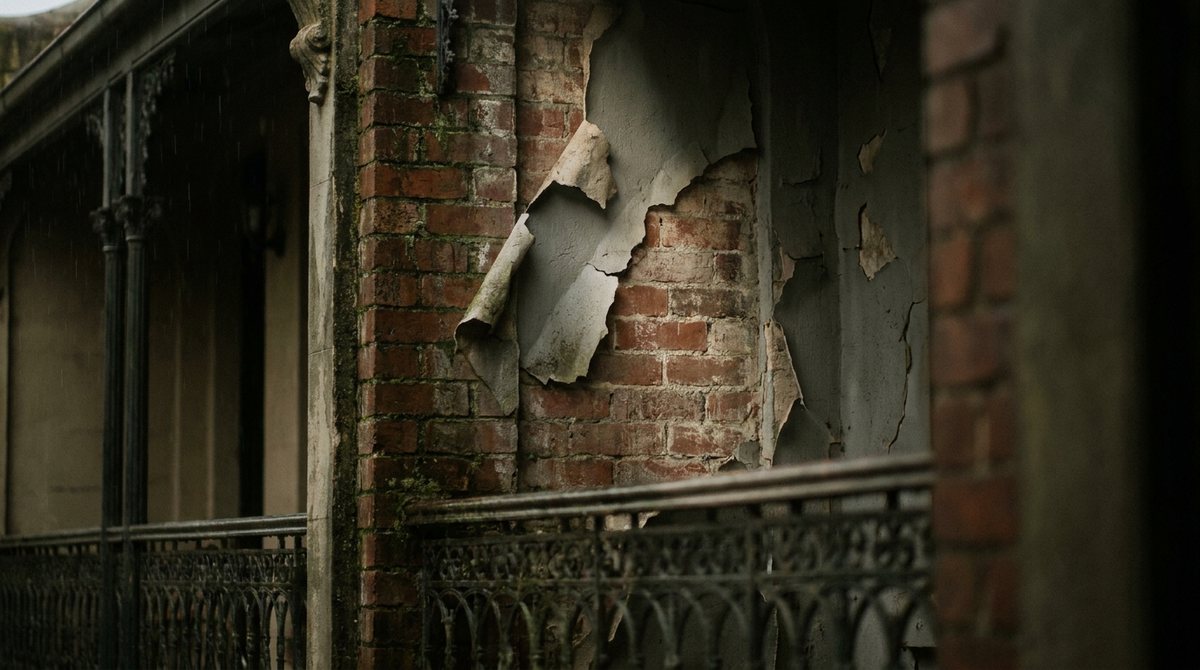
A Paddington terrace gets a fresh cement render over its old brickwork. It looks sharp for a year. Then hairline cracks appear, then patches sound hollow, then sections start to come away. The render was not bad work in itself. It was the wrong render for the wall. On old soft Sydney brick, a hard modern cement render is a compatibility failure waiting to happen, and the rule that governs it is simple. The render must never be stronger than what it sits on.
Render is not a finish you choose by look. It is a system you match to the substrate underneath.
Why strength compatibility matters
Old Sydney brick, particularly in Victorian and Federation terraces, is relatively soft and was laid in a soft lime-based mortar. The wall was built to move and breathe. A modern cement-rich render is hard, rigid, and strong, much stronger than the brick beneath it. When a hard render is bonded to a soft substrate, the mismatch causes problems on two fronts.
First, movement. The wall flexes with thermal and moisture cycling, but the rigid render cannot flex with it. The stress concentrates and the render cracks. Second, the bond. When the render is stronger than the substrate, any stress at the interface is resolved by the weaker material failing, so the brick face fails and the render delaminates, taking the surface of the brick with it. The rule of render, like plaster, is that each coat should be no stronger than the one beneath, and the base coat no stronger than the substrate. A hard render on soft brick breaks that rule at the most important interface.
Breathability and the moisture trap
Old brick walls were designed to let moisture move through them and evaporate, the wall breathes. A dense, low-permeability cement render seals the face and traps moisture in the wall. On a terrace already prone to rising damp or penetrating damp, this is a serious problem. The trapped moisture has nowhere to go, so it accumulates behind the render, drives salts to the render-brick interface, and accelerates both the render delamination and the damp.
This is why a lime-based or a purpose-formulated breathable render is the compatible choice on old brick. It carries enough strength to perform without exceeding the brick, and it stays vapour-permeable so the wall can still breathe. Pair a sealing cement render with a rising damp problem and you get the worst of both, the damp gets worse and the render fails.
Substrate preparation: the other half of compatibility
Even the right render fails on a substrate that was not prepared. The brick face has to be clean, sound, free of dust, old paint, and friable material, and dampened appropriately so it does not draw the water out of the fresh render too fast. On a remedial job, that often means removing the failed old render entirely, raking out and repointing degraded mortar joints, and treating any salt contamination before the new render goes on.
A key coat or a bonding treatment is often specified to establish the grip between the prepared substrate and the new render. Skipping the preparation, rendering over a dusty, painted, or salt-laden face, guarantees a bond failure regardless of how compatible the render itself is. Compatibility is the material and the preparation together.
What to do next
- On any render scope for an old brick terrace, ask whether the render is matched to the soft substrate, lime-based or a breathable system, not a hard cement render.
- Confirm the scope keeps the wall vapour-permeable, especially if there is any damp history.
- Confirm the substrate preparation, removal of failed render, repointing, salt treatment, before the new render goes on.
- Treat a hard cement render specified over soft Federation brick as a compatibility failure in the making.
How Supcon handles this
Thomas matches the render to the substrate. On soft old brick, that means a lime-based or breathable system that performs without exceeding the strength of the brick and keeps the wall vapour-permeable. The substrate is prepared properly first, failed render off, joints repointed, salts treated, so the new render bonds to sound material.
The render serves the wall, not the other way around. See chemical DPC chemistry for the damp side of old brick walls, and the facade repair service page for the technical detail.
Get a remedial scope. Send through the issue.