Epoxy versus polyurethane crack injection: the chemistry that decides
A crack in a concrete wall can be filled with epoxy or polyurethane. The choice is not arbitrary. Whether the crack is structural and whether it is wet decides the resin. Here's why.
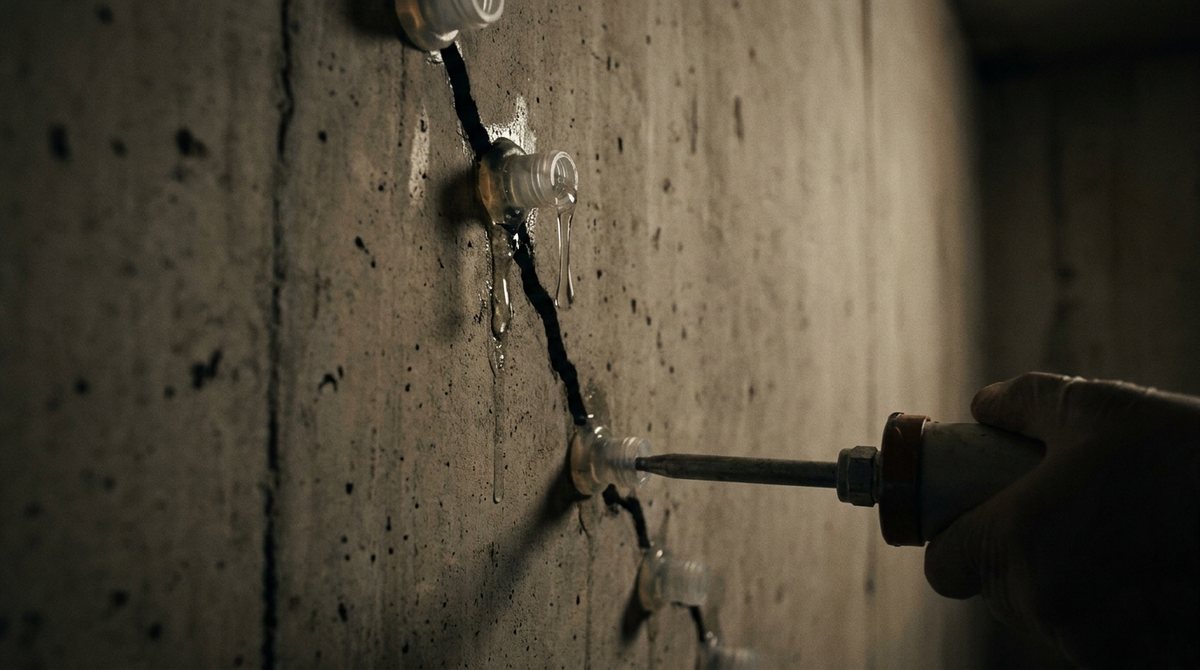
A crack runs across a basement wall in a North Sydney apartment building. Water weeps through it after rain. The fix is crack injection, and the first decision is the resin. Epoxy or polyurethane. They are different chemistries with different jobs. Choose epoxy for a wet active crack and it will not cure properly. Choose polyurethane for a dry structural crack that needs to be welded back together and you have not restored the strength. The crack tells you which one.
Two resins, two jobs. The crack decides, not a preference.
What crack injection does
Crack injection introduces a resin into a crack under pressure, through ports drilled or surface-mounted along the crack line. The resin fills the crack to its depth and either bonds the two faces back together or seals the crack against water. Which of those two outcomes you need is the whole question.
Epoxy: the structural weld
Epoxy resin is rigid and high-strength. Injected into a crack, it cures to a hard material that bonds the two concrete faces together with a strength that can exceed the concrete itself. This is structural repair. When a crack has reduced the load-carrying capacity of an element, and the crack is dormant, no longer moving, epoxy injection restores the monolithic strength by welding the faces back into one.
The conditions epoxy needs are specific. The crack should be dry, or close to it, because epoxy does not cure reliably in the presence of water, it can be displaced or fail to bond on a wet face. The crack should be dormant, because epoxy is rigid and will not accommodate further movement, an epoxy-filled crack that moves simply cracks again alongside the repair. Epoxy is the right call for a dry, dormant, structural crack where strength has to be restored.
Polyurethane: the flexible water seal
Polyurethane resin is a different animal. The grades used for crack injection react with water and cure into a flexible foam or gel that seals the crack against water. This is water-stopping repair, not structural repair. Polyurethane does not weld the faces together or restore strength. It seals the leak and, because it stays flexible, it accommodates some ongoing movement without failing.
Critically, polyurethane works in wet cracks. The water that disqualifies epoxy is what triggers the polyurethane reaction. A basement wall crack actively weeping water is the textbook polyurethane application, the resin reacts with the water present, expands into the crack, and seals it. Its flexibility also suits cracks that still move slightly with thermal or structural cycling, where a rigid epoxy fill would simply crack again.
How the crack decides
Two questions set the resin. Is the crack structural, does the strength of the element need restoring. Is the crack wet or moving. A dry, dormant crack that has compromised structural capacity is an epoxy job. A wet crack, or a crack that still moves, where the goal is to stop water rather than restore strength, is a polyurethane job.
The basement wall weeping water is polyurethane, the crack is wet and the goal is to stop the water. A dormant shrinkage crack in a structural beam that has reduced its capacity, dry and stable, is epoxy. Get these the wrong way around and the repair does not hold, the epoxy fails to cure in the wet crack, or the polyurethane fails to restore the strength the structural crack needed.
What to do next
- On any crack injection scope, ask which resin is specified and why, structural epoxy or water-stopping polyurethane.
- Confirm the diagnosis covers whether the crack is active or dormant. A rigid epoxy fill in a moving crack just cracks again.
- On a wet, weeping crack, expect polyurethane. Epoxy in a wet crack is a cure problem waiting to happen.
- On a crack that has reduced structural capacity, expect epoxy, and expect the crack to be confirmed dormant first.
How Supcon handles this
Thomas diagnoses the crack before the resin is chosen, whether it is active or dormant, wet or dry, structural or non-structural. A dry dormant structural crack gets epoxy to restore the strength. A wet or moving crack gets polyurethane to seal the water and accommodate the movement. The ports are set along the crack at the correct spacing and the injection runs to refusal so the resin reaches the full depth.
The crack sets the chemistry. See basement and lift-pit water ingress for where polyurethane injection earns its place, and the crack injection service page for the technical detail.
Get a remedial scope. Send through the issue.