Managing heritage-overlay remedial work in Sydney
A heritage-listed Sydney building still leaks, cracks, and suffers concrete cancer. But the remedial work runs under conservation controls. Here's how heritage overlays shape a remedial scope.
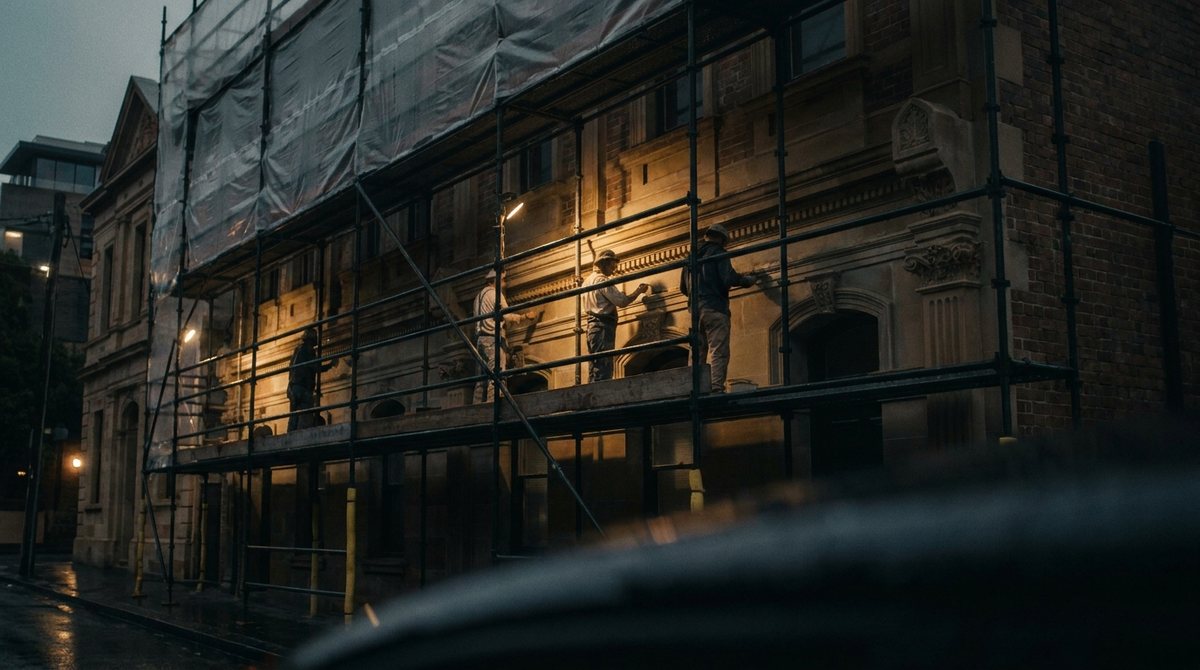
A heritage-listed building in Paddington has concrete cancer in its balcony slabs and rising damp in its walls. The defects are ordinary. The constraints are not. The building sits under a heritage overlay, which means the remedial work has to satisfy conservation requirements as well as fix the defect, sympathetic materials, reversible interventions where possible, and approval for significant works. Heritage-overlay remedial work is its own discipline, where the rectification and the conservation have to be served at the same time.
A heritage building suffers the same defects as any other. The difference is that the fix has to respect what the building is.
What a heritage overlay means for remedial work
A heritage listing or a heritage conservation area overlay places controls on what can be done to a building and how. The intent is to preserve the building's heritage significance, its fabric, its character, its detail, for the future. For remedial work, that means the rectification cannot simply default to the most efficient modern method if that method would damage or erase heritage fabric.
Significant remedial works on a listed building may require approval, and the work generally has to follow conservation principles, use materials sympathetic to the original, retain original fabric where it can be retained, and make interventions that respect the building's significance. A remedial contractor on a heritage building is working within these constraints, not around them.
Where heritage and remedial method collide
The collisions are predictable. Render is the clearest. A heritage building's original lime render cannot be replaced with hard cement render, both for the compatibility reasons that apply to any old building and because the conservation requirements call for sympathetic materials. The render has to be matched to the original in material and finish, which is exactly what the soft old substrate needs anyway. Heritage and good practice align here.
Damp treatment is another. A chemical damp proof course is generally an acceptable intervention, but the associated work, removing salt-laden plaster, reinstating render, has to protect original plaster, cornices, and detail where they are significant. Concrete repair on a heritage building has to reinstate profiles and finishes sympathetically. Throughout, the principle is to do what the defect requires while preserving what the heritage listing protects.
The approvals dimension
Significant works on a heritage-listed building may need consent from the relevant authority, and the scope has to account for this. The condition assessment, the proposed method, and the materials may need to be documented to support an application, and the conservation requirements may shape the method before the work can proceed. This adds a planning dimension to a heritage remedial scope that an ordinary building does not carry.
A remedial scope on a heritage building therefore has to be developed with the conservation controls in view from the start, not retrofitted to them after the method is set. The method that satisfies the defect, the heritage fabric, and the approval pathway together is the one that gets the building rectified without compromising its significance or running into a consent problem mid-programme.
Why this suits a careful, heritage-aware approach
Heritage-overlay work rewards a contractor who understands old buildings and works sympathetically, the soft-substrate render matching, the careful protection of original detail, the reversible-where-possible intervention. It is detailed, patient work, closer to conservation than to modern construction, and it draws on an understanding of how old fabric behaves. A fast modern rectification approach applied to a heritage building does damage that cannot be undone.
What to do next
- Establish the heritage status early. A listing or conservation-area overlay shapes the method and may require approval.
- Develop the remedial scope with the conservation controls in view from the start, not retrofitted afterward.
- Expect sympathetic materials, lime render matched to the original, protection of significant detail, reversible interventions where possible.
- Account for the approvals pathway in the programme. Significant heritage works may need consent.
How Supcon handles this
Thomas develops a heritage remedial scope with the conservation controls in view, matching materials to the original fabric, protecting significant detail, and favouring sympathetic and reversible interventions where the conservation principles call for them. The defect is rectified to the relevant standards while the heritage significance is preserved, and the approvals pathway is accounted for in the programme.
A heritage building gets the fix it needs without losing what it is. See render systems and substrate compatibility for the render-matching detail, and the facade repair service page for the technical detail.
Get a remedial scope. Send through the issue.