Rising damp in inner west terraces: what actually works
Newtown, Glebe, Annandale, Erskineville. Victorian and Federation terraces with no working damp proof course. Here's what fixes it and what makes it worse.
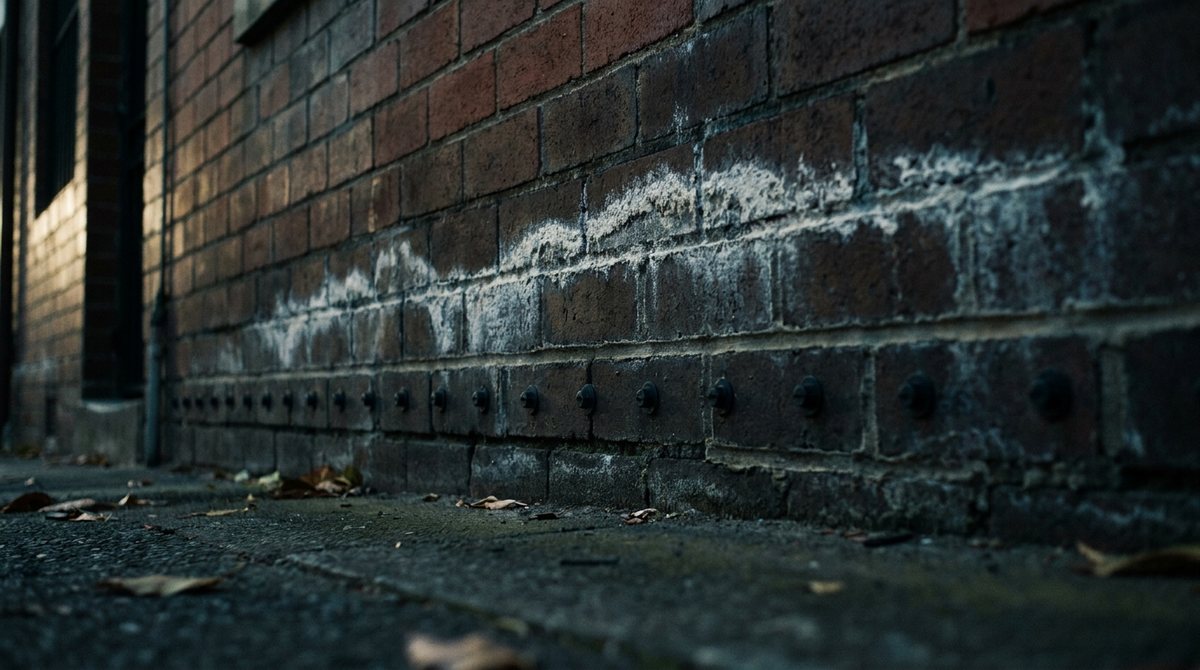
A 1905 Annandale terrace. Living room wall dark across the bottom 600mm. Skirting board rotted from the back out. White salty bloom on the brickwork outside under the front window. Paint blistering above the floorline every time the owner repaints. This is rising damp, the classic Sydney inner west pattern, and topical paint is not going to fix it.
The good news. There is a fix. It has been around for decades, it is well understood, and when it is done properly it lasts.
What rising damp actually is
Groundwater moves upward through porous building materials by capillary action. Brick, mortar, render, concrete. The water rises until evaporation matches the rate of rise. In a Victorian or Federation brick terrace built without a damp proof course (DPC), or where the original DPC has been bridged by later rendering or paving, the water keeps climbing until something stops it.
The water carries dissolved salts up through the wall. When the water evaporates at the surface, the salts get left behind. Over years and decades, the salt accumulates. It damages the paint film, breaks down the plaster, and creates the visible bloom on the outside of the wall. The dark line across the bottom 300mm to 600mm is the band where the water is currently sitting. The damaged paint and plaster above is historical, from years of the band rising and falling with seasonal groundwater.
Why painting over it makes it worse
A coat of paint over a damp wall traps moisture against the substrate. The wall cannot breathe outward, so the moisture either gets pushed further up the wall, migrates sideways, or accelerates the breakdown of the plaster behind the paint.
The new paint blisters within months. The owner repaints. The blistering returns faster the second time. By the fourth repaint, the plaster behind the paint is gone, the brickwork is salt-laden and friable, and the proper rectification now has to include removing salt-laden plaster that the early repaints made worse. Vapour barriers fitted between the wall and the gyprock do the same thing. They do not address the water. They push the moisture path elsewhere.
What actually works in an inner west terrace
A chemical damp proof course does the work. Done properly, it stops the capillary rise at the level where the DPC is installed. The wall above dries out over the following six to twelve months. The salt-laden plaster gets removed, salt-resistant render goes back, and the wall stays dry.
The sequence on a typical Annandale or Newtown terrace. First, establish whether the existing DPC failed or whether the rectification needs to add one from scratch. Most pre-1980 terraces never had a working DPC, or had a slate or bitumen course that cracked decades ago. Some Federation-era stock had a lead-based DPC that is still there but bridged by later render or paving.
Second, address any bridge. If a later renovation rendered over the original DPC line, the render across the line gets removed and the line re-exposed. If a side path or garden bed has been built up against the wall above the DPC level, it gets lowered. Third, install a chemical DPC at the correct height. Drill injection holes along the mortar joint at 90 to 120mm centres. Inject a silicone or siloxane water-repellent cream at the rate the manufacturer specifies for the wall thickness. Allow the cure period.
Fourth, address the salt-laden plaster. Strip the affected plaster and render back to brickwork, brush down, dust-extract, treat with a salt neutraliser if the loading is heavy, and reinstate with a salt-resistant render system. Fifth, allow the new render to dry. Four to eight weeks before any paint goes on. Painting too early traps moisture in the new render and the cycle starts again. Sixth, reinstate the internal finish with a breathable paint system and new skirting board.
The honest part about the longevity
A chemical DPC installed correctly to the manufacturer's spec, with the salt-laden plaster properly removed and the drying period respected, holds for twenty to thirty years. A surface repaint of the same wall holds for six to eighteen months and leaves the wall progressively worse each cycle. The difference is not a matter of degree. One stops the capillary rise. The other paints over it.
What to do next
- Get a moisture meter reading at multiple heights along the affected wall, plus a salt analysis if the external bloom is heavy. The reading confirms whether the issue is rising damp or something else (penetrating damp, plumbing leak, condensation).
- Establish whether the original DPC exists and whether it has been bridged. A site walk by someone who knows what they are looking at usually settles this in twenty minutes.
- Refuse paint-only work on damp walls. It makes the problem worse.
- Plan around the drying period. Most rising damp rectifications need four to eight weeks before final finishes go on.
How Supcon handles this
Thomas walks the terrace, takes moisture readings at three or four heights, inspects the external wall for DPC level and bridge points, and writes the scope against what the readings show. Chemical DPC injection to manufacturer's spec, salt-laden plaster removed, salt-resistant render reinstated, internal finishes after the drying period. Defects liability on the workmanship.
If the diagnostic shows penetrating damp from a side wall or a plumbing leak rather than rising damp from below, the scope addresses the actual cause. See chemical DPC chemistry for how the injection works, and the rising damp and damp proof course service page for the technical detail.
Get a remedial scope. Send through the issue.