Defects in 2000 to 2010 Sydney strata towers: the pattern by floor
Sydney's 2000 to 2010 strata towers fail in a predictable order. Membranes first, then concrete, then facade. Here's the defect timeline by building element for that decade of stock.
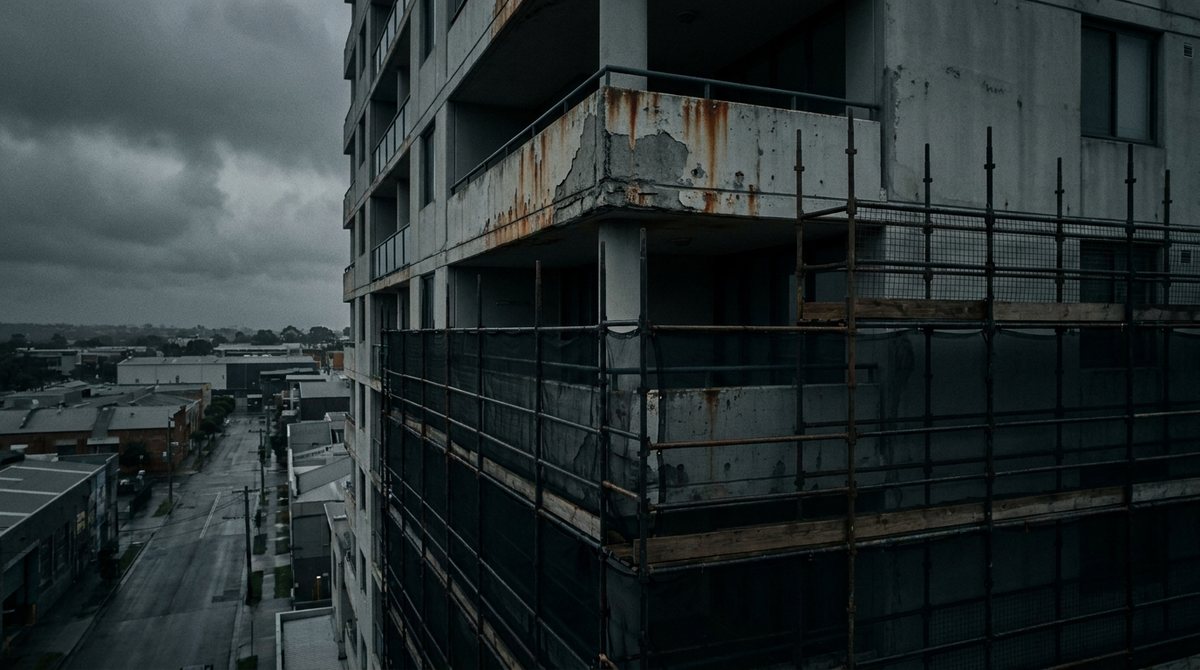
A 2004 Rhodes tower and a 2008 Hurstville tower are failing in the same order, eighteen months apart. Strata managers who hold a portfolio of this stock see it repeat building to building. The defects do not arrive at random. They arrive in a sequence set by which element was waterproofed, which was value-engineered, and which has had twenty years of Sydney weather working on it. Knowing the sequence lets a committee get ahead of the next strike instead of chasing the last one.
The 2000 to 2010 strata tower has a defect timeline. Read it and you can plan the programme.
Why this decade of stock fails together
The 2000 to 2010 build run sat at the front edge of Sydney's apartment surge. Older AS 3600 cover specifications, membranes specified to the standard of the day rather than for a thirty-year life, and detailing done under time pressure. The buildings performed for a decade or more, and then the elements with the shortest design margin began to give way, in roughly the same order across the stock.
First: the membranes
Waterproofing membranes are the first to go, because they carry water every day and were the most likely element to be value-engineered. Balcony membranes, planter box membranes, podium decks, and internal wet areas. The first leaks usually surface eight to fifteen years in, as a stain in the apartment below a balcony or a planter.
This is the cheapest stage to be at, in risk terms, because a failed membrane caught early is a waterproofing job, not a structural one. The danger is that the early leaks get surface-repaired, the source is left running, and the building progresses to the next stage. A committee that treats the first membrane failures as the start of a programme, rather than isolated incidents, gets ahead of the curve.
Second: the concrete
Where the membrane failures are left to run, the water reaches the reinforcement, and the building moves into the concrete cancer stage. Balcony soffits spall first, then planter slab edges, then carpark soffits under podium planters, then parapets. This is the stage where the scope changes character, from waterproofing to structural rectification to AS 3600, with cover surveys, break-out, steel treatment, and on coastal stock, anodes.
The 2000 to 2010 stock is squarely in this stage now. A tower that had its first balcony leaks around 2015 and did nothing structural about them is seeing soffit spalling now. The concrete stage is the consequence of the membrane stage being ignored.
Third: the facade
Facade defects run on a slightly longer clock, fifteen to twenty years, because render, sealants, and paint degrade with UV and thermal cycling rather than constant water. Render cracks at slab edges, sealant joints tearing past their movement class, paint failing across south elevations, render panels delaminating. The facade stage often overlaps the concrete stage, because the same water that drives soffit spalling also gets behind a failed sealant joint and corrodes the wall ties.
How to read your own building against the timeline
A committee holding a 2000 to 2010 tower can place the building on the timeline by what is showing. First balcony or planter leaks, you are at the membrane stage, and the move is to programme the waterproofing before it becomes concrete. Soffit or slab-edge spalling, you are at the concrete stage, and the move is a cover survey and a structural scope to AS 3600. Render cracks, tearing sealants, peeling paint, you are at the facade stage, and the move is an elevation-by-elevation facade programme.
Most towers of this era are showing two stages at once. The value of the timeline is that it tells you what is coming next, so the programme can be staged and budgeted across financial years rather than triggered by the next emergency.
What to do next
- Place your building on the timeline by what is showing now, membrane, concrete, or facade stage.
- Treat early membrane failures as the start of a programme, not isolated leaks. That is where the progression is cheapest to interrupt.
- On a building already spalling, get a cover survey and a structural scope to AS 3600 rather than chasing each spall.
- Stage the programme across financial years using the timeline, so the work is planned rather than reactive.
How Supcon handles this
Thomas walks the building and places it on the defect timeline, then writes a staged programme that gets ahead of the next strike. Membrane work to AS 4654.2 where the building is at the waterproofing stage, structural rectification to AS 3600 where it has reached the concrete, facade programmes staged by elevation where the render and sealants have gone.
The timeline turns a string of emergencies into a programme. See 2010 to 2020 mid-rise membrane failures for the next decade of stock, and the concrete cancer repair service page for the structural-stage detail.
Get a remedial scope. Send through the issue.