Negative-side waterproofing: why it is a last resort
When you cannot get to the outside of a leaking basement wall, negative-side waterproofing works from within. It can hold back water, but it does not protect the structure. Here's the trade-off.
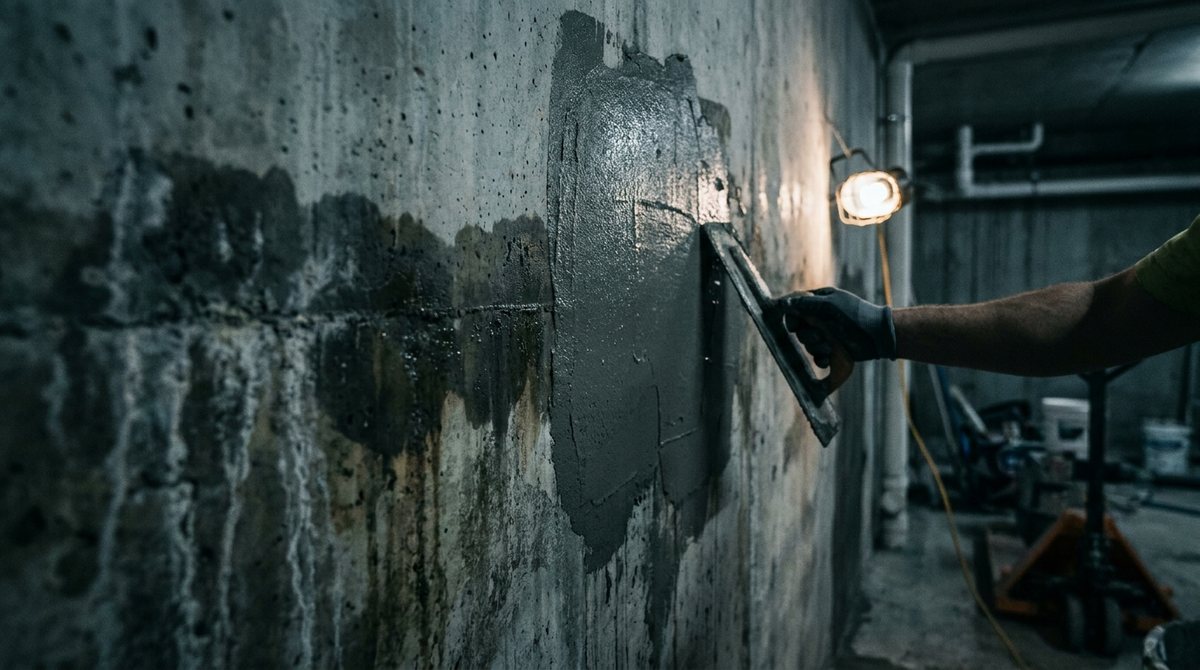
A basement wall in a Pyrmont apartment building is leaking. The right fix is to waterproof the outside of the wall, the positive side, where the water is. But the wall is against the boundary, buried two metres down, with another building hard against it. You cannot get to the outside. The only option left is to waterproof from the inside, the negative side. It can stop the water coming through. What it cannot do is protect the wall itself, and that trade-off is why it is the last resort, not the first choice.
Positive-side waterproofing keeps water out of the structure. Negative-side keeps it out of the room. They are not the same thing.
Positive side versus negative side
Positive-side waterproofing is applied on the face of the structure that the water is on, the outside of a basement wall, the top of a deck. The membrane sits between the water and the concrete, so the concrete never gets wet. This is the right way to waterproof, because it protects the structure as well as the interior. The water is stopped before it enters the concrete at all.
Negative-side waterproofing is applied on the dry face, the inside of the basement wall, the opposite side from the water. The water still passes into and through the concrete, it just gets stopped at the inner face before it reaches the room. The interior stays dry. The wall does not.
Why keeping the wall wet is a problem
A concrete wall that is allowed to stay saturated, because the waterproofing only stops the water at the inner face, carries ongoing risk. Water moving through the concrete carries dissolved salts and, on the coast, chlorides. It keeps the reinforcement in a wet environment, which is the condition reinforcement corrosion needs. Over time, a permanently wet wall is more exposed to concrete cancer than a wall kept dry by positive-side waterproofing.
There is also a hydrostatic pressure issue. Negative-side systems have to resist the water pressure pushing the membrane off the wall from behind, because the water is on the far side trying to come through. A positive-side membrane is pressed onto the structure by the water, which helps it stay put. A negative-side membrane is pushed away from the structure by the water, which works against it. This is why negative-side systems are specialised, often cementitious crystalline coatings that penetrate and seal within the concrete rather than just coating the surface, and why they demand sound substrate and careful application.
When negative-side is genuinely the answer
Negative-side waterproofing is the right call when the positive side is genuinely inaccessible and cannot be reached without disproportionate work, a buried basement wall against a boundary, a lift pit, a tanked structure below an adjoining property. In those cases, the choice is not positive versus negative. It is negative-side waterproofing versus living with the leak. There the negative-side system is the correct and necessary solution, applied with full awareness of what it does and does not protect.
Crystalline cementitious systems are the common negative-side technology for this. They react with moisture and the free lime in the concrete to grow crystals within the pore structure, sealing the concrete against water from within. Paired with crack injection, polyurethane for the wet active cracks, they can hold back significant water from the dry side. They are a real and proven approach. They are simply the approach you reach for when the better one is off the table.
What to do next
- On a basement or lift-pit leak, ask whether the positive side is genuinely inaccessible before accepting negative-side waterproofing. It should be the last resort, not the default.
- If negative-side is necessary, expect a crystalline cementitious system, not a surface paint, and expect crack injection alongside it.
- Understand that negative-side waterproofing keeps the room dry but leaves the wall wet, so ask how the long-term reinforcement risk is being managed.
- On a wall where the outside can be reached with reasonable work, push for positive-side waterproofing. It protects the structure, not just the interior.
How Supcon handles this
Thomas waterproofs from the positive side wherever the outside can reasonably be reached, because that protects the structure as well as the interior. Negative-side waterproofing is reserved for genuinely inaccessible faces, basement walls against boundaries, lift pits, where it is the correct and necessary call. There it is a crystalline cementitious system paired with polyurethane crack injection, applied to sound, prepared substrate.
The right side first, the inside only when the outside is genuinely out of reach. See basement and lift-pit water ingress for the full basement picture, and the waterproofing and membrane service page for the technical detail.
Get a remedial scope. Send through the issue.