How to scope a remedial quote so the strata committee can defend it
The 7-line brief that gets a defensible remedial scope back from a builder. A practical playbook for Sydney strata managers heading into an AGM.
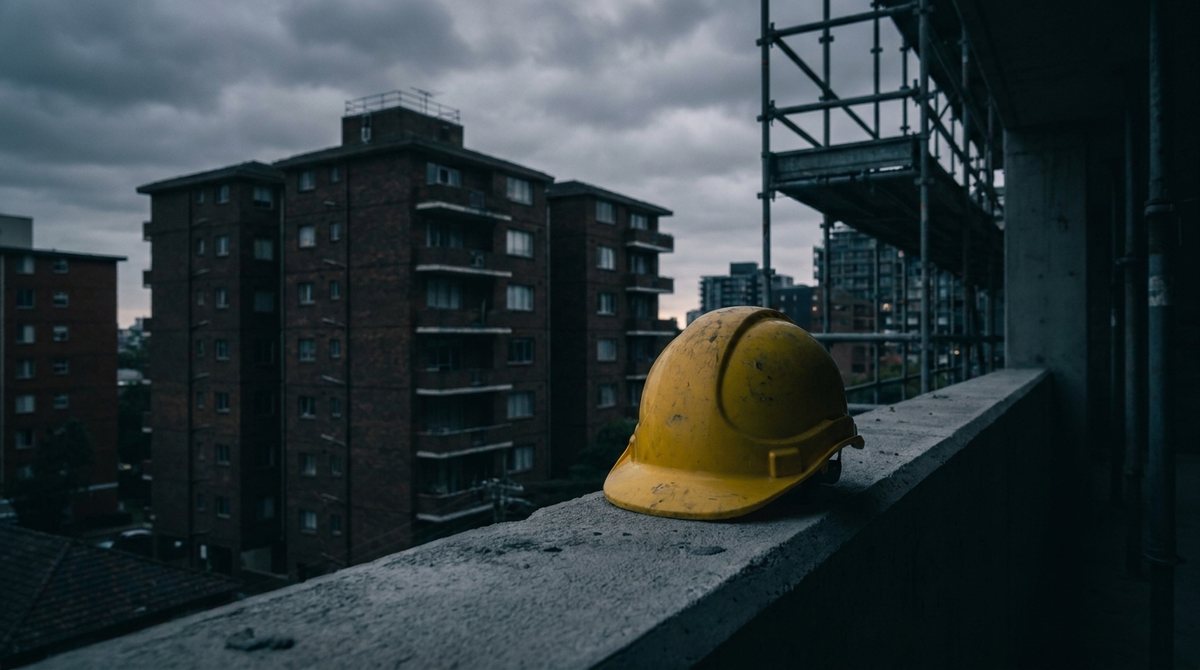
The committee meets in twelve days. The agenda has one line that reads remedial works to balconies, Norton Street, Chatswood. The strata manager opens the scope and three of the seven volunteer members ask the same question. What exactly is this. The document cannot answer. The motion fails. The leak keeps going.
This is what happens when the brief to the builder was loose.
A defensible scope does not start at the scope. It starts at the brief. Get the brief right and the document comes back as a scope of works the committee can read, line by line, and approve at the first meeting. Get it wrong and you are back at the next AGM with the same leak and a new contractor.
What goes wrong when the brief is loose
A loose brief sounds like this. Can you scope remedial works for the balconies at 14 Norton Street. The contractor walks the site for forty minutes, takes a few photos, and sends back a single line with a number on it.
The committee cannot defend that. The scope could be missing half the work. The contractor could be planning a topical recoat that fails inside a year, or a full membrane replacement to AS 4654.2. There is no way to tell from a single line. A tight brief produces a tight scope. The committee gets a document that names every defect, specifies every fix, and references the standard the work is being done to. They read it once. They approve it. The job runs.
The 7-line brief
Email this to three remedial builders. Word it exactly like this, attach your building consultant's report if you have one, and add the building address.
- Site address and number of balconies in scope.
- The defect pattern you are seeing (water below the balcony, cracked tiles, hollow bedding, balustrade rust, whichever applies).
- Year the building was built, or your best estimate.
- Whether the membrane has been touched before, and what was done.
- Access available (apartment access, scaffold permissible, swing-stage permissible, residents on site during work).
- Request a scope of works document, line by line, including the AS code the membrane will be installed to.
- Request a written variation policy and a defects liability period stated in the scope.
That is it. Seven lines. A serious remedial builder reads that brief and knows what to send back. A surface contractor either declines the brief or sends back a one-line response that proves the point.
What a defensible scope looks like
The scope of works document is the centrepiece. Every committee member should be able to read it without a translator. The pattern looks like this.
Defect 1, membrane failure at balcony 3-04, north-facing. Diagnosis from site walk on 14/03/2026. Symptoms, water staining on apartment 2-04 ceiling, hollow bedding under tiles at the hob and perimeter, tile cracking radiating from the drain. Cause, original 2008 membrane has failed at the hob upstand. Rectification, lift tiles and bedding across the full balcony, remove old membrane to substrate, correct falls to drain, install new two-coat liquid-applied polyurethane membrane to AS 4654.2, reinstate tile bed and tiles to match, flood test before sign-off. Materials specified to a named manufacturer system. Warranty, ten-year manufacturer warranty on membrane, two-year defects liability on workmanship. Sign-off, post flood test, post 12-month inspection.
Repeat the same structure for every defect. No bundling. No stage 1, stage 2 abstraction that hides the detail.
How to compare the scopes that come back
Three checks. Does each scope specify the same AS code. Does each scope include the same line items. Does each scope carry the same warranty term. If two scopes are missing the AS code, they are surface jobs in disguise. If the warranty is twelve months on one and ten-year manufacturer plus six-year statutory on another, you are not comparing the same product. The scope to recommend is the one with the most defensible diagnosis, not the shortest document.
What to do next
- Send the 7-line brief to three remedial builders this week.
- Refuse any scope that does not include the AS code and a line-by-line breakdown as a separate document.
- Compare diagnoses before anything else. The defect named, the cause stated, the standard cited.
- Use the building consultant's defect report as the brief attachment. It removes ambiguity and anchors every scope in the same evidence.
How Supcon handles this
Thomas walks the site, lifts the tiles or the render at the failure points, writes the scope of works against the actual defect, then delivers. The scope comes through as a separate document, line by line, with the AS code cited per defect, the warranty stated per item, and the variation policy written into the close. The strata manager hands it straight to the committee. The committee reads it once.
If the scope is wrong, the committee asks for changes before any work starts. If it is right, the work runs to the document. That is the standard. See reading a remedial scope of works for the twelve-line checklist, and the waterproofing and membrane service page for the technical detail behind the scope.
Get a remedial scope. Send through the issue.